
FAQ's
IoT solutions refer to integrated systems that connect physical devices, sensors, software platforms, and networks to collect, transmit, and analyze data. These solutions enable monitoring, automation, predictive analytics, and operational optimization across industries.
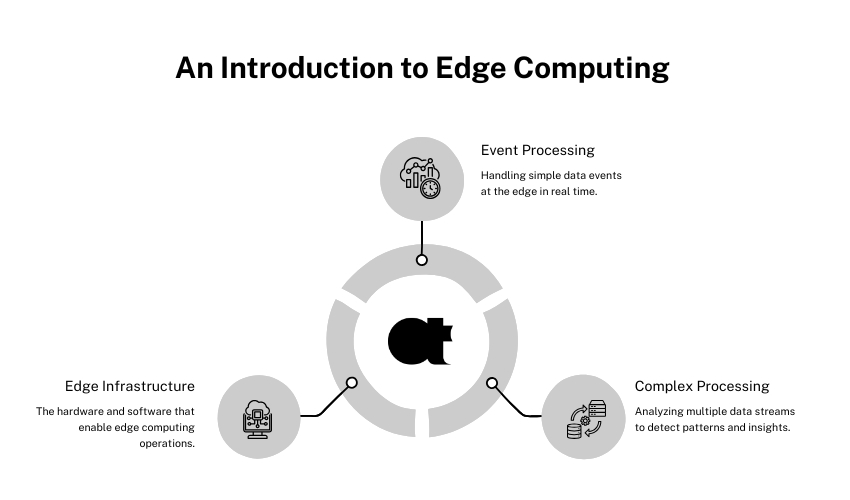
Edge computing is a distributed computing model where data processing occurs near the data source rather than in centralized cloud environments. In IoT deployments, edge computing enables faster response times, reduced bandwidth usage, and localized decision-making.
An IoT device primarily focuses on data generation through sensing or actuation. An edge device performs data processing, filtering, analytics, and localized decision execution. Edge devices operate with higher computational capability compared to IoT devices.
Edge computing for IoT addresses latency, reliability, and scalability challenges. Localized processing ensures real-time responses, supports operations during network disruptions, and improves data security by limiting unnecessary data transmission.
IoT connectivity defines how devices communicate within a connected ecosystem. Connectivity selection influences data reliability, latency, power efficiency, and scalability. Stable and secure connectivity ensures uninterrupted data flow and consistent system behavior.