
Skip links

Top Mobile App Design Principles Every Beginner Should Know

A quick guide to mastering the essential UI/UX foundations that shape modern mobile experiences

Mobile App Design Principles

Key Takeaways

  • Strong Mobile App Design begins with strategic research, platform clarity, and a structured visual foundation.
  • High-performing mobile designs rely on consistency, simplicity, visual hierarchy, accessibility, and performance-oriented execution.
  • Industry-leading apps demonstrate how design principles transform complex products into clear, engaging experiences.
  • Professional design tools expand creative capability, support precise workflows, and reinforce industry-standard output quality.
  • Continuous refinement ensures long-term relevance and sustained engagement across all mobile apps.

How to Design a Mobile App:
The Essentials

Mobile App Design represents a disciplined blend of creativity, logic, and user psychology. Every successful app begins long before any screen is crafted. Foundations established at the earliest stages shape how the final product functions, performs, and resonates across diverse audiences. With mobile apps dominating digital ecosystems, a thoughtful, research-driven design approach is crucial for delivering clarity, consistency, and long-term value.

The following sections present a complete, authoritative pathway that aligns with industry expectations, followed by leading mobile app design agency teams, app design firm professionals, and established mobile application design services providers. 

Each fundamental step creates a strong structure for the design principles that follow
Mobile App Design Principles

Competition analysis provides essential clarity regarding market expectations. Every category, finance, wellness, entertainment, productivity, and more, contains dominant apps that set standards for UX design, ui elements, navigation patterns, and aesthetics. Understanding these benchmarks reveals what attracts users’ attention and what frustrates them.

Identifying successful patterns clarifies direction, while observing flaws highlights opportunities for innovation. Distinct design identity emerges from analyzing layout behavior, visual hierarchy, screen transitions, content density, and brand positioning. This foundational research prevents design elements that mimic competitors and ensures the final interface carries a meaningful and recognizable identity.

Mobile App Design varies across Android and iOS environments. Each platform carries unique interface guidelines, standard behaviors, and navigation structures. Android emphasizes flexibility across numerous screen size variations, while iOS leans toward strict visual uniformity and structured components.

Platform clarity affects everything, including gestures, typography rules, spacing, iconography, and button placements. Mobile app design and development services rely on platform-focused clarity to maintain performance, reduce inconsistencies, and support predictable navigation patterns across devices.

A clear platform direction strengthens visual accuracy and prevents misalignment between design and technical implementation. In many cases, multi-platform design requires adaptive thinking, ensuring brand consistency while still respecting native behaviors.

Wireframes, mockups, and prototypes bring conceptual ideas into structured form. These visual tools create a precise foundation for layout behavior, content positioning, and overall flow. Complex functionalities become easier to evaluate when presented visually.

Wireframes outline skeletal structures, focusing on hierarchy and functionality without distractions. Mockups bring aesthetic elements into play, establishing color palettes, typography, spacing, and contrast. Interactive prototypes simulate real behavior and help validate transitions and micro-interactions.

Visual representations ensure each screen remains purposeful, logical, and user-focused. Any mobile application design agency depends on these early drafts to align goals, resolve structural issues, and maintain clarity throughout the design process.

A high-quality mobile product emerges from coordinated talent. Designers, developers, strategists, and testers must operate with shared clarity and precision. Mobile App Design demands technical understanding, aesthetic vision, and user-centered thinking, making team capability a critical factor.

Expert mobile app design services ensure professional accuracy across accessibility standards, UI construction, performance optimization, and device-specific behavior. A strong team reduces miscommunication, accelerates production, and maintains quality across every design iteration.

The collective skill of a specialized mobile app design agency enables refined decision-making and ensures that each design element aligns with industry-level standards.

Performance tracking defines the real-world impact of the design. Downloads reveal initial interest, while long-term usage data highlights sustained relevance. Metrics such as session duration, feature interaction frequency, user engagement levels, and retention rate reveal whether the interface supports meaningful interaction.

Reviews and public feedback highlight areas where design principles succeed or fail. These insights guide improvements that align with evolving user expectations. Strong measurement habits ensure that Mobile App Design remains aligned with practical outcomes rather than assumptions.

Design remains an evolving process. Technology changes, user behavior shifts, and visual trends progress. Continuous refinement keeps an app modern, functional, and engaging. Iterative improvements may involve restructuring navigation paths, updating color palettes, improving accessibility, optimizing screen layouts, or modernizing motion design.

Mobile App Design thrives on adaptability. Every iteration reinforces usability, enhances clarity, and strengthens consistency, ensuring long-term relevance within competitive markets.

Core Mobile App Design Principles

Once foundational decisions are in place, the next step involves applying essential design principles that elevate product quality. 

These principles transform raw ideas into polished, intuitive, and industry-aligned experiences.

Mobile App Design Principles

1. Simplicity First

Simplicity removes friction. With a limited screen size, mobile interfaces demand precision. Overcrowded designs confuse users and diminish engagement. Clarity arises through clean spacing, purposeful content placement, and minimal UI elements that highlight essential functions.

Simple interfaces increase comprehension and prevent unnecessary cognitive load. This principle anchors the entire design process and guides how content and functionality are prioritized within every screen.

2. Consistency Across the Interface

A consistent interface builds trust. Repetition of colors, typography, spacing, and iconography reinforces familiarity. Predictable interaction patterns create a unified experience across all sections of the app.

Strong consistency originates from well-defined design systems, common among professional mobile application design agency teams. These systems ensure that every button, animation, and structural element maps back to a cohesive visual identity.

Consistency eliminates confusion and positions the app as a reliable, polished digital environment.

“Discover the Principles Behind High-End Mobile UX”

3. Visual Hierarchy That Guides Attention

Visual hierarchy controls flow. Larger or bold elements capture immediate focus. Balanced spacing helps organize content. Strategic color contrast emphasizes importance. Placement of primary actions at visually dominant positions increases clarity.

A strong hierarchy makes important information instantly recognizable. It shapes how users process screens and navigate through the app without hesitation.

This principle remains especially important for content-rich mobile apps where clarity determines overall satisfaction.

4. Readability and Accessible UI Elements

Readable text enhances comprehension. Effective typography involves careful decisions regarding font size, line spacing, contrast, and alignment.

Touch elements must remain comfortably sized to prevent accidental actions. Navigation components require precise placement within ergonomic thumb zones.

Accessibility ensures inclusivity for all users, including those with visual or motor challenges. High-contrast color schemes, screen reader compatibility, and logical structure strengthen overall usability and reflect professional Mobile App Design standards.

Mobile App Design Principles

5. Responsive and Adaptive Layouts

Mobile devices vary widely across screen size, resolution, and orientation. Responsive layouts maintain structure regardless of device. Adaptive elements adjust to new ratios while preserving clarity.

This principle ensures smooth experiences on tablets, smartphones, and foldable devices. Leading mobile app design and development services prioritize responsiveness to maintain brand consistency across global markets.

6. High-Performance Visual Execution

Performance influences perception. Optimized assets reduce load times. Efficient animations maintain fluidity. Lightweight graphics minimize processing demands.

Every performance decision shapes user perception of quality. Fast, smooth interfaces stand out in competitive markets and elevate overall user experience.

7. Meaningful Micro-Interactions

Micro-interactions guide behavior and reinforce feedback. Subtle motion cues, button state changes, and smooth transitions highlight completed actions.

These details add personality to the interface, transforming static screens into engaging experiences. When implemented with restraint, micro-interactions enhance usability and strengthen emotional connection.

Awesome Mobile App Design Examples

Studying industry-leading apps provides real-world validation of design principles. These examples showcase how thoughtful Mobile App Design elevates complex ideas.

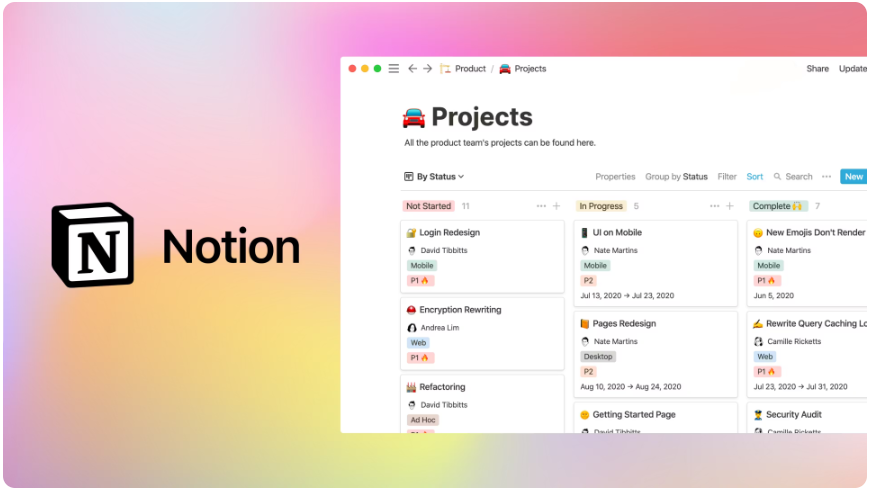
Notion merges multiple tools, notes, tasks, databases, and collaboration into one modular workspace. Despite handling extensive content, its design remains clean and intuitive. Flexible layouts, drag-and-drop interactions, and structured spacing support powerful customization without visual chaos.


Takeaway: Notion proves that complex apps remain approachable through a strong hierarchy, minimalist structure, and intuitive workflows.
Mobile App Design Principles

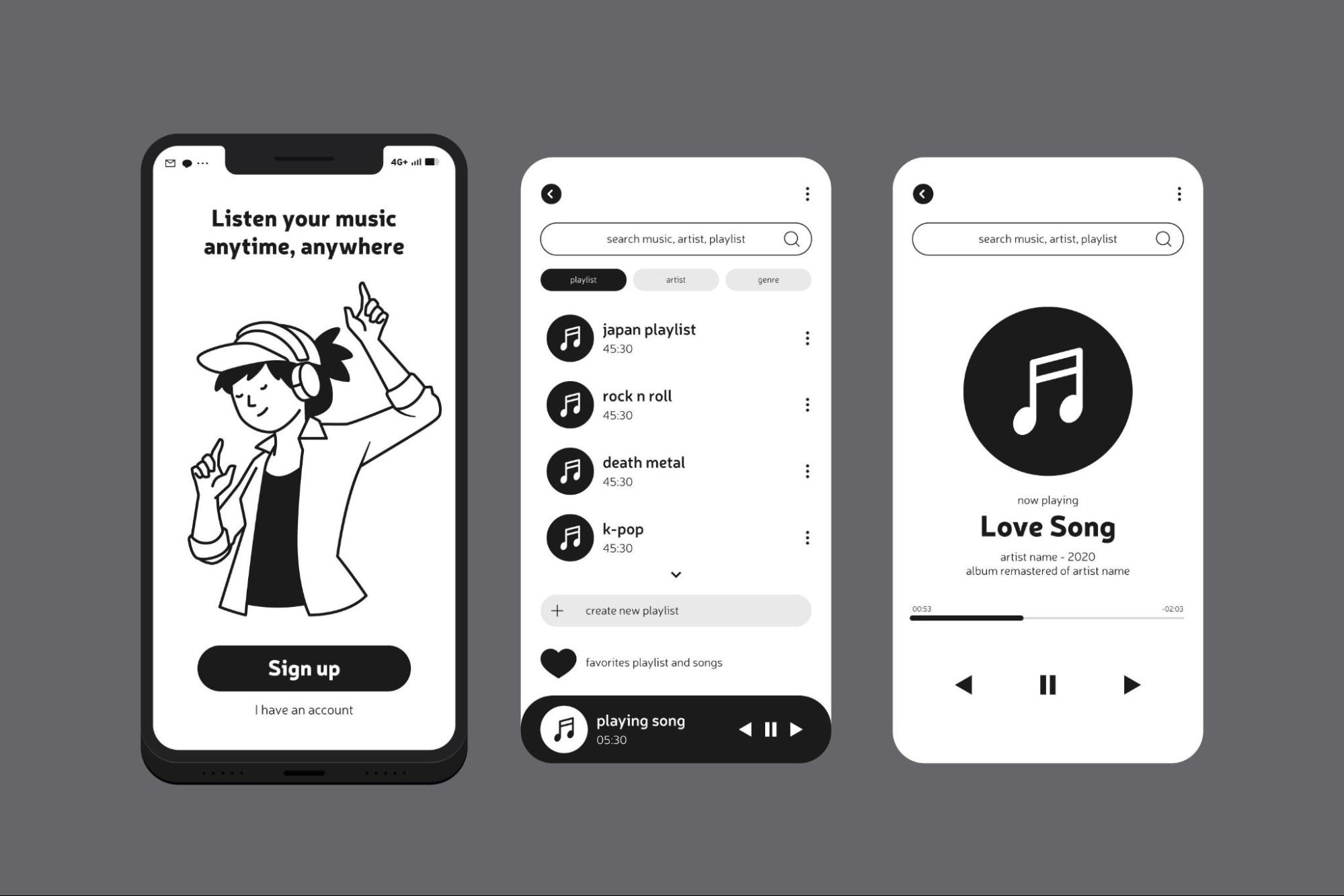
Spotify excels at personalization. Its interface adapts to listening patterns, presenting curated playlists like Discover Weekly and Daily Mixes. Seamless navigation, visually balanced content placement, and dynamic recommendations create a tailored experience.


Takeaway: Spotify demonstrates how intelligent personalization strengthens engagement and reinforces satisfaction within content-rich mobile apps.

Useful Tools for Mobile App Design

Professional mobile app design services rely on high-quality tools to create accurate, scalable, and visually strong interfaces. 

These tools enhance workflow efficiency and design precision.

Figma

Figma

Figma delivers browser-based collaboration, pixel-perfect precision, and comprehensive component libraries. It supports rapid adjustments and ensures consistent UI elements across all devices.

Framer

Framer

Framer excels at interactive prototyping. Designers simulate real gestures, transitions, and animations, allowing early verification of flow and functionality.

InVision

InVision transforms static designs into interactive prototypes. Mobile mirroring provides real-device previews that accurately reflect the user experience.

Adobe XD

Adobe XD supports repeat grids, smooth auto-animate transitions, and precise layout tools. Its structure-friendly environment makes it ideal for scalable Mobile App Design workflows.

Sketch

Sketch offers a clean interface and extensive plugin support. Device-specific artboards simplify layouts for different screen size requirements.

Final Thoughts

Mobile App Design demands strategic structure, disciplined simplicity, and continuous refinement. Research, platform clarity, visual systems, consistent hierarchy, accessibility, and performance-driven decisions form the backbone of exceptional mobile experiences. 

Professional mobile application design services and advanced mobile app design and development services rely on these principles to create interfaces that remain modern, intuitive, and visually compelling across an evolving digital landscape. This authoritative guidance reflects industry expectations and aims to support readers seeking dependable direction, delivered with clarity by AtheosTech.

FAQ's

Yes. These principles establish clarity, structure, and usability, allowing beginners to craft smooth and intuitive mobile experiences.

Simplicity removes clutter, highlights core actions, and creates a cleaner flow that helps users interact with the app effortlessly.

Responsive design ensures the layout remains functional and visually balanced on all modern devices.

Absolutely. Accessibility supports individuals with various needs and enhances the overall usability of the app.

Yes. Reviewing high-performing apps helps beginners understand real-world design standards and effective UX patterns.

This website uses cookies to improve your web experience.
See your Privacy Settings to learn more.