How IoT Platforms Turn Real-Time Data Into Business Intelligence
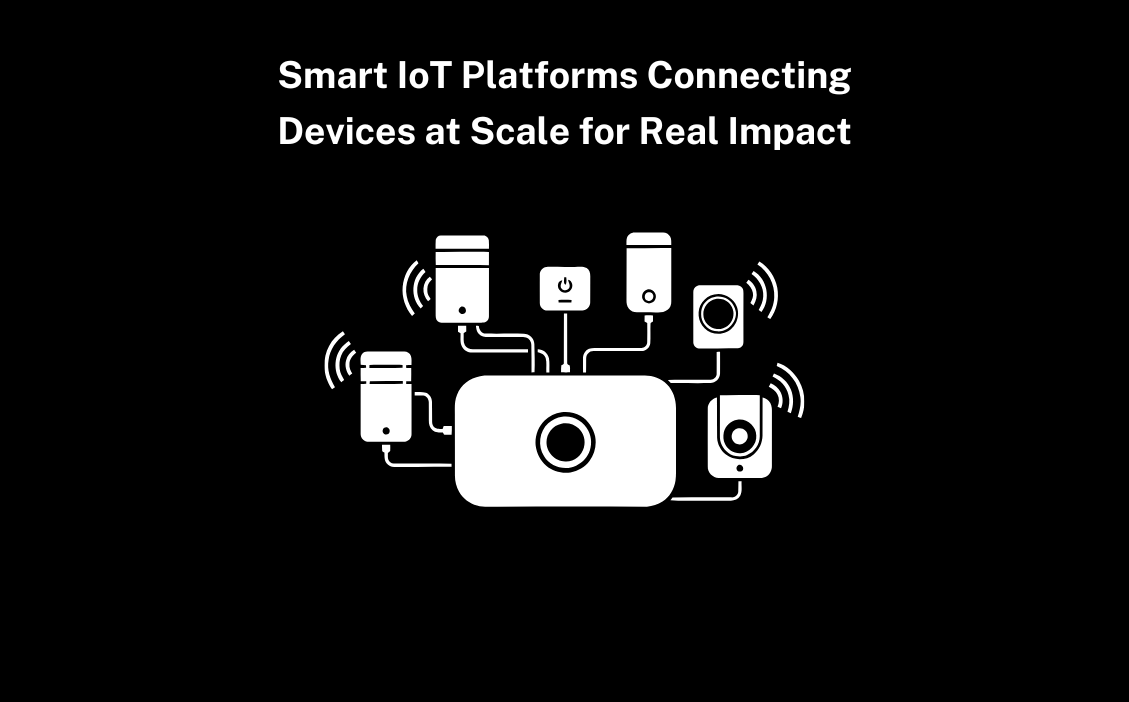
A World That Thinks Before You Do.
Imagine waking up in a city that already knows what kind of day you’re about to have. The traffic lights adjust before congestion even forms. Office buildings cool themselves before employees arrive. Hospitals monitor patients from miles away. Factories fix machines before they break. Energy flows exactly where it’s needed, no waste, no delays, no guessing.
This isn’t science fiction.
This is the silent revolution powered by IoT Solutions.
We don’t just connect devices. We connect the real world to intelligence. The Internet of things IoT has quietly become the backbone of modern life. It sits inside cities, homes, hospitals, factories, and energy grids, constantly collecting signals, turning them into real-time data, and driving data-driven decisions.
The companies that understand this shift don’t just survive.
They dominate.
Most people think IoT is just about smart speakers or fitness bands. That’s only the surface.
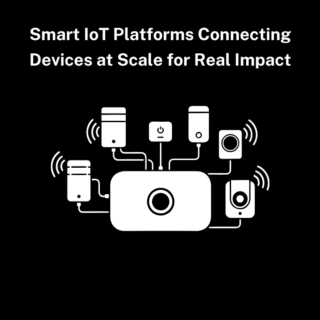
True IoT Solutions are intelligent ecosystems where physical things, machines, vehicles, buildings, medical tools, and sensors talk to software platforms that understand what’s happening in the real world.
Here’s the simple flow:
That’s how connected devices become business intelligence tools.
We design IoT not as gadgets, but as thinking systems.
Most IoT failures don’t happen because of bad code.
They happen because of bad planning.
That’s why IoT consulting services are the foundation of every one of ur project.
An expert IoT consultant doesn’t start with devices. They start with questions:
Through our Internet of Things consulting services, we map your business goals first, then design IoT systems that directly improve them. This is why elite IoT consulting firms focus on outcomes, not hardware.
We operate as one of the premium IoT consulting companies because we treat IoT like a business weapon, not a tech toy.
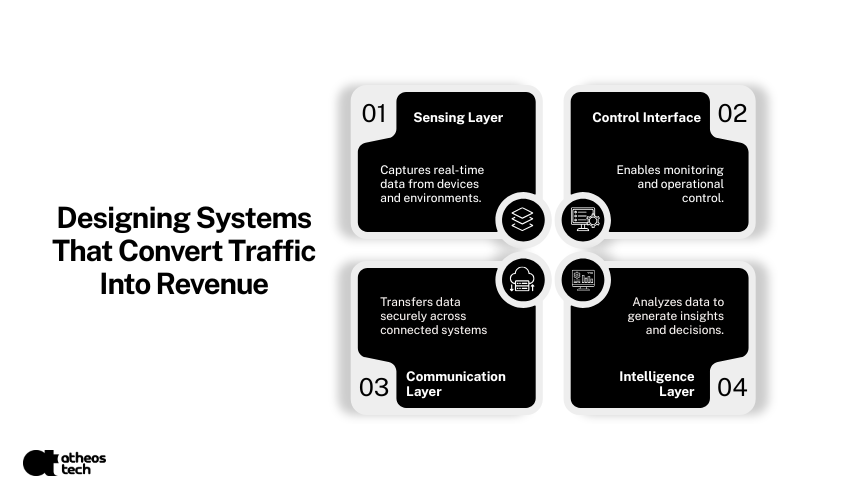
These are the “eyes and ears.” Sensors detect heat, vibration, movement, air quality, machine health, and patient vitals. They sit inside factories, homes, hospitals, trucks, and even on streets.
This is where IoT connectivity matters most. Data flows through Wi-Fi, 5G, LPWAN, and satellite networks. If the network is slow, insight is late. If insight is late, action is lost.
Cloud systems and AI engines process data and find meaning. They compare today’s patterns with yesterday’s behavior. They predict failures. They optimize performance.
Dashboards show everything clearly. Leaders see problems before they happen. Systems respond automatically.
This is how IoT technology turns noise into knowledge.
An IoT ecosystem works like a living body.
By integrating SEO-driven traffic with CRO-optimized experiences, businesses can turn visibility into tangible ROI. Traffic becomes a predictable pipeline for leads and revenue, rather than a vanity metric.
These are the “eyes and ears.” Sensors detect heat, vibration, movement, air quality, machine health, and patient vitals. They sit inside factories, homes, hospitals, trucks, and even on streets.
This is where IoT connectivity matters most. Data flows through Wi-Fi, 5G, LPWAN, and satellite networks. If the network is slow, insight is late. If insight is late, action is lost.
Cloud systems and AI engines process data and find meaning. They compare today’s patterns with yesterday’s behavior. They predict failures. They optimize performance.
Dashboards show everything clearly. Leaders see problems before they happen. Systems respond automatically.
This is how IoT technology turns noise into knowledge.
Let’s bring IoT out of theory and into the streets, homes, hospitals, and factories where it’s already changing how life and business work.
In modern smart cities, IoT sensors are placed on traffic lights, roads, buildings, and public infrastructure. These sensors constantly collect real-time data about traffic flow, air quality, noise levels, weather conditions, and energy use. This information is sent to city platforms that analyze patterns and adjust systems automatically. For example, traffic lights can change their timing to reduce congestion, streetlights can dim when no one is around to save power, and waste collection trucks can be routed only when bins are actually full. The result is a city that feels smoother, cleaner, and more responsive to the people living in it.
Smart homes use IoT devices to learn how people live and then respond without being asked. Lights turn on when you enter a room, thermostats adjust based on your schedule, and security systems recognize normal behavior versus suspicious activity. Over time, your home becomes more than a place you control; it becomes a space that understands you. It saves energy, improves comfort, and gives peace of mind by working quietly in the background.
Modern energy grids powered by IoT are no longer one-way systems. Instead of simply sending electricity out, they listen and respond. Sensors across the grid monitor power flow, equipment health, and demand in real time. If part of the system is overloaded or damaged, the grid can reroute power automatically. This reduces blackouts, saves energy, and supports renewable sources like solar and wind. In short, IoT turns energy into a smart, self-balancing system.
In healthcare, IoT makes care continuous instead of occasional. With remote patient monitoring, wearable devices track heart rate, oxygen levels, movement, and even sleep patterns. This data is sent securely to healthcare platforms where doctors and nurses can see changes instantly. If something looks wrong, they can act before it becomes an emergency. Patients feel safer at home, and hospitals reduce overcrowding while improving outcomes.
IoT gives full visibility across the supply chain. Sensors track where goods are, how fast they move, and what condition they’re in. Temperature-sensitive items like food or medicine are monitored every second. If something slows down or goes off route, systems alert teams immediately. Inventory updates automatically, routes adjust in real time, and businesses avoid delays, losses, and waste. This turns the supply chain into a living, transparent system instead of a guessing game.
In factories, industrial IoT connects machines, tools, and production lines into one intelligent network. Sensors watch vibration, heat, pressure, and usage. When something starts wearing down, the system predicts failure before it happens. This is called predictive maintenance. Instead of stopping work after a breakdown, companies fix problems early. Downtime drops. Costs fall. Productivity rises.
These are not experiments.
These are real-world use cases that drive real ROI.
In modern smart cities, IoT sensors are placed on traffic lights, roads, buildings, and public infrastructure. These sensors constantly collect real-time data about traffic flow, air quality, noise levels, weather conditions, and energy use. This information is sent to city platforms that analyze patterns and adjust systems automatically. For example, traffic lights can change their timing to reduce congestion, streetlights can dim when no one is around to save power, and waste collection trucks can be routed only when bins are actually full. The result is a city that feels smoother, cleaner, and more responsive to the people living in it.
Smart homes use IoT devices to learn how people live and then respond without being asked. Lights turn on when you enter a room, thermostats adjust based on your schedule, and security systems recognize normal behavior versus suspicious activity. Over time, your home becomes more than a place you control; it becomes a space that understands you. It saves energy, improves comfort, and gives peace of mind by working quietly in the background.
Modern energy grids powered by IoT are no longer one-way systems. Instead of simply sending electricity out, they listen and respond. Sensors across the grid monitor power flow, equipment health, and demand in real time. If part of the system is overloaded or damaged, the grid can reroute power automatically. This reduces blackouts, saves energy, and supports renewable sources like solar and wind. In short, IoT turns energy into a smart, self-balancing system.
In healthcare, IoT makes care continuous instead of occasional. With remote patient monitoring, wearable devices track heart rate, oxygen levels, movement, and even sleep patterns. This data is sent securely to healthcare platforms where doctors and nurses can see changes instantly. If something looks wrong, they can act before it becomes an emergency. Patients feel safer at home, and hospitals reduce overcrowding while improving outcomes.
IoT gives full visibility across the supply chain. Sensors track where goods are, how fast they move, and what condition they’re in. Temperature-sensitive items like food or medicine are monitored every second. If something slows down or goes off route, systems alert teams immediately. Inventory updates automatically, routes adjust in real time, and businesses avoid delays, losses, and waste. This turns the supply chain into a living, transparent system instead of a guessing game.
In factories, industrial IoT connects machines, tools, and production lines into one intelligent network. Sensors watch vibration, heat, pressure, and usage. When something starts wearing down, the system predicts failure before it happens. This is called predictive maintenance. Instead of stopping work after a breakdown, companies fix problems early. Downtime drops. Costs fall. Productivity rises.
These are not experiments.
These are real-world use cases that drive real ROI.
In modern smart cities, IoT sensors are placed on traffic lights, roads, buildings, and public infrastructure. These sensors constantly collect real-time data about traffic flow, air quality, noise levels, weather conditions, and energy use. This information is sent to city platforms that analyze patterns and adjust systems automatically. For example, traffic lights can change their timing to reduce congestion, streetlights can dim when no one is around to save power, and waste collection trucks can be routed only when bins are actually full. The result is a city that feels smoother, cleaner, and more responsive to the people living in it.
Smart homes use IoT devices to learn how people live and then respond without being asked. Lights turn on when you enter a room, thermostats adjust based on your schedule, and security systems recognize normal behavior versus suspicious activity. Over time, your home becomes more than a place you control; it becomes a space that understands you. It saves energy, improves comfort, and gives peace of mind by working quietly in the background.
Modern energy grids powered by IoT are no longer one-way systems. Instead of simply sending electricity out, they listen and respond. Sensors across the grid monitor power flow, equipment health, and demand in real time. If part of the system is overloaded or damaged, the grid can reroute power automatically. This reduces blackouts, saves energy, and supports renewable sources like solar and wind. In short, IoT turns energy into a smart, self-balancing system.
In healthcare, IoT makes care continuous instead of occasional. With remote patient monitoring, wearable devices track heart rate, oxygen levels, movement, and even sleep patterns. This data is sent securely to healthcare platforms where doctors and nurses can see changes instantly. If something looks wrong, they can act before it becomes an emergency. Patients feel safer at home, and hospitals reduce overcrowding while improving outcomes.
IoT gives full visibility across the supply chain. Sensors track where goods are, how fast they move, and what condition they’re in. Temperature-sensitive items like food or medicine are monitored every second. If something slows down or goes off route, systems alert teams immediately. Inventory updates automatically, routes adjust in real time, and businesses avoid delays, losses, and waste. This turns the supply chain into a living, transparent system instead of a guessing game.
In factories, industrial IoT connects machines, tools, and production lines into one intelligent network. Sensors watch vibration, heat, pressure, and usage. When something starts wearing down, the system predicts failure before it happens. This is called predictive maintenance. Instead of stopping work after a breakdown, companies fix problems early. Downtime drops. Costs fall. Productivity rises.
These are not experiments.
These are real-world use cases that drive real ROI.
“Turn your ideas into intelligent IoT Solutions.”
IoT is powerful because it doesn’t stop at collecting information; it turns that information into action.
Here’s the simple flow:
This is how businesses move from slow reports to instant reflexes. Instead of waiting days or weeks for data, they see what’s happening now and act.
We don’t build one-off systems. We build foundations for growth.
Our Internet of Things development services include everything needed to create strong, secure, and scalable IoT platforms:
Our IoT application development services are designed so your IoT ecosystem can grow as your business grows, without rebuilding from scratch.
AtheosTech stands at the intersection of strategy, engineering, and business intelligence. We don’t treat IoT as a technical project; we treat it as a business transformation. Every solution we design begins with a deep understanding of how your organization operates, where value is created, and where inefficiencies hide.
Our approach brings leadership, data, and technology into one connected system. We architect IoT Solutions that align devices, platforms, and people into a single operational vision. That means your teams see the same truth in real time, your processes move with purpose, and your decisions are backed by live intelligence, not assumptions.
With us, IoT becomes more than connectivity.
It becomes clear. Control. And competitive advantage.
The world around you is already intelligent. Machines are talking. Systems are reporting. Data is flowing every second of every day. The opportunity is no longer in collecting information; it’s in understanding it and acting on it faster than anyone else.
Your business already has a voice inside its data.
The real question is whether you’re listening, and whether you’re ready to lead with what you hear.
With the right IoT Solutions, you don’t just keep up with the connected world.
You command it, with AtheosTech leading the way.
IoT Solutions are systems that connect devices, sensors, and software to collect and analyze real-time data. At AtheosTech, we design IoT Solutions that turn raw data into actionable insights, helping businesses improve efficiency, reduce costs, and make smarter decisions.
AtheosTech delivers IoT Solutions across industries including smart cities, healthcare, manufacturing, energy, logistics, and retail. Our tailored approach ensures every solution fits the specific needs and goals of each business sector.
AtheosTech’s IoT consulting services focus on business outcomes, not just technology. We start with strategy, map ROI, and then design scalable systems that align with your operations, ensuring long-term success and competitive advantage.
Yes. AtheosTech offers complete IoT application development services, including device firmware, cloud platforms, dashboards, integrations, and mobile/web applications, everything needed to build and scale a powerful IoT ecosystem.
Businesses choose AtheosTech because we combine strategy, engineering, and innovation into one premium approach. Our IoT Solutions don’t just connect devices,they connect decisions, operations, and growth into one intelligent system.
IoT Solutions are systems that connect devices, sensors, and software to collect and analyze real-time data. At AtheosTech, we design IoT Solutions that turn raw data into actionable insights, helping businesses improve efficiency, reduce costs, and make smarter decisions.
AtheosTech delivers IoT Solutions across industries including smart cities, healthcare, manufacturing, energy, logistics, and retail. Our tailored approach ensures every solution fits the specific needs and goals of each business sector.
AtheosTech’s IoT consulting services focus on business outcomes, not just technology. We start with strategy, map ROI, and then design scalable systems that align with your operations, ensuring long-term success and competitive advantage.
Yes. AtheosTech offers complete IoT application development services, including device firmware, cloud platforms, dashboards, integrations, and mobile/web applications, everything needed to build and scale a powerful IoT ecosystem.
Businesses choose AtheosTech because we combine strategy, engineering, and innovation into one premium approach. Our IoT Solutions don’t just connect devices,they connect decisions, operations, and growth into one intelligent system.
Adding {{itemName}} to cart
Added {{itemName}} to cart