


- AtheosTech
IoT in Business Operations: Enhancing Efficiency and Decision-Making
How Smart IoT Solutions Are Redefining Operational Efficiency and Strategic Decisions
The Internet of Things (IoT) is no longer a futuristic concept – it has become a practical, results-driven technology reshaping how businesses operate. From manufacturing floors and logistics networks to retail stores and healthcare systems, IoT solutions are enabling organizations to work smarter, faster, and with greater accuracy.
At its core, IoT connects physical devices, sensors, and systems to collect real-time data and convert it into actionable insights. When implemented strategically, this data empowers leaders to make informed decisions, optimize processes, and reduce operational inefficiencies. With expert IoT consulting services, businesses can turn raw data into a competitive advantage.
AtheosTech works closely with enterprises to design and implement scalable IoT solutions that align with business objectives and long-term growth strategies.
Understanding IoT in Business Operations
IoT in business operations refers to the integration of connected devices, sensors, and software platforms into everyday workflows. These connected systems continuously collect, transmit, and analyze data across multiple touchpoints.
Unlike traditional systems that rely on manual inputs or delayed reporting, IoT-driven operations provide:
- Real-time visibility into assets and processes
- Automated monitoring and alerts
- Predictive insights instead of reactive responses
Internet of Things consulting services help organizations identify where IoT delivers the most value—whether through automation, predictive maintenance, or performance optimization.
What Are IoT Solutions?
IoT solutions are complete ecosystems that include connected devices, data platforms, analytics engines, and user interfaces. They are designed to solve specific operational challenges rather than simply deploy technology.
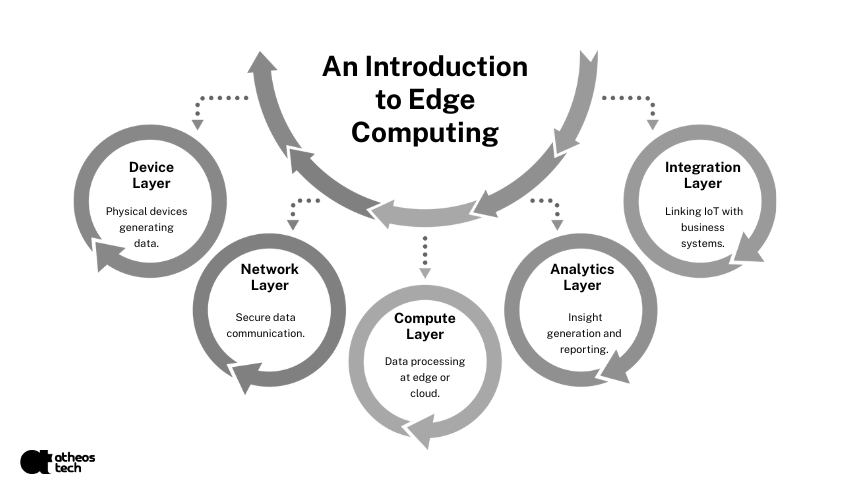
A comprehensive IoT solution typically includes:
- Sensors and connected devices
- Secure connectivity and data transmission
- Cloud or edge-based data processing
- Analytics dashboards and reporting tools
- Integration with enterprise systems
Professional IoT consulting firms ensure these components work together seamlessly, delivering reliable performance and measurable ROI.
Industry Use Cases of IoT in Business Operations
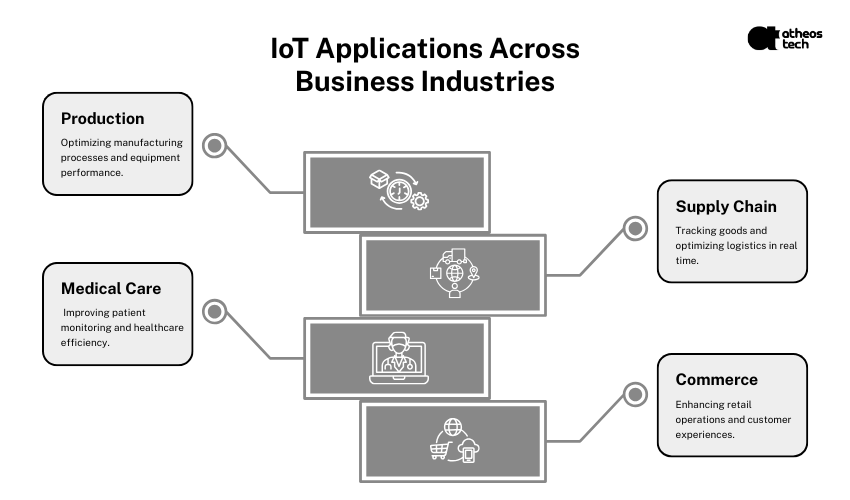
The Internet of Things (IoT) is transforming how industries monitor assets, optimize processes, and make data-driven decisions. By connecting physical systems with intelligent software, IoT enables organizations to gain real-time visibility, reduce inefficiencies, and improve operational resilience. Below are key industry-specific applications demonstrating how IoT solutions address distinct business challenges.
Statistic Table: Real Brands Leveraging IoT
| Brand | IoT Application | Operational Impact | Business Outcome |
|---|---|---|---|
| Amazon | Smart warehouses | Automated inventory tracking | Faster fulfillment & reduced errors |
| GE | Predictive maintenance | Equipment health monitoring | Reduced downtime & costs |
| Walmart | Supply chain IoT | Real-time inventory visibility | Improved demand forecasting |
| Tesla | Connected manufacturing | Production analytics | Higher efficiency & quality |
Challenges in Implementing IoT Solutions
Despite its benefits, IoT adoption presents challenges:
- Data security and privacy concerns
- Integration with legacy systems
- Scalability and infrastructure complexity
- Managing large volumes of data
Expert IoT consulting services help mitigate these risks through strategic planning and robust architecture design.
Best Practices for Successful IoT Adoption
- Define clear business objectives
- Start with pilot projects
- Ensure security-by-design
- Choose scalable platforms
- Partner with experienced IoT consulting firms
Following these practices increases long-term success and sustainability.
IoT, Edge Computing, and the Future of Smart Operations
IoT combined with edge computing enables faster data processing closer to the source. This reduces latency and improves real-time responsiveness.
For a deeper understanding of this synergy, explore our previous blog: “IoT & Edge Computing: The Ultimate Guide to Connected Technology” It explains how edge-enabled IoT systems are shaping the future of connected enterprises.
How AtheosTech Delivers End-to-End IoT Consulting Services
AtheosTech provides comprehensive IoT solutions tailored to business goals. From strategy and architecture to deployment and optimization, AtheosTech supports every stage of the IoT journey.
Services include:
- IoT consulting and strategy development
- Internet of Things development services
- Secure and scalable IoT architecture
- Real-time analytics and dashboards
With AtheosTech, businesses gain a trusted partner for building intelligent, data-driven operations.
Conclusion
IoT solutions are redefining business operations by enabling efficiency, transparency, and smarter decision-making. Organizations that adopt IoT strategically gain a clear competitive edge in today’s data-driven economy.
AtheosTech helps businesses unlock the full potential of IoT through expert consulting and tailored solutions.
Ready to transform your business operations with IoT?
Connect with AtheosTech today and start building smarter systems.
FAQ's
IoT improves operational efficiency by providing real-time visibility into equipment performance, resource utilization, and process bottlenecks. Through automation and predictive analytics, businesses can reduce downtime, optimize maintenance schedules, minimize waste, and streamline daily operations across departments.
IoT enables data-driven decision-making by transforming raw operational data into actionable insights. Advanced analytics and dashboards allow decision-makers to identify trends, predict outcomes, and respond quickly to changing conditions, leading to more accurate and timely business decisions.
IoT-powered predictive maintenance uses sensor data to detect early signs of equipment failure. By analyzing parameters such as temperature, vibration, and usage patterns, businesses can perform maintenance only when necessary, reducing unplanned downtime and extending asset lifespan.
IoT security depends on robust architecture, encryption, device authentication, and continuous monitoring. When implemented with proper security frameworks and governance policies, IoT systems can safely support business-critical operations while protecting data integrity and privacy.
Common challenges include data management complexity, cybersecurity risks, system interoperability, scalability concerns, and initial implementation costs. These challenges can be mitigated through strategic planning, scalable architectures, and industry-specific IoT frameworks.
FAQ's
IoT improves operational efficiency by providing real-time visibility into equipment performance, resource utilization, and process bottlenecks. Through automation and predictive analytics, businesses can reduce downtime, optimize maintenance schedules, minimize waste, and streamline daily operations across departments.
IoT enables data-driven decision-making by transforming raw operational data into actionable insights. Advanced analytics and dashboards allow decision-makers to identify trends, predict outcomes, and respond quickly to changing conditions, leading to more accurate and timely business decisions.
IoT-powered predictive maintenance uses sensor data to detect early signs of equipment failure. By analyzing parameters such as temperature, vibration, and usage patterns, businesses can perform maintenance only when necessary, reducing unplanned downtime and extending asset lifespan.
IoT security depends on robust architecture, encryption, device authentication, and continuous monitoring. When implemented with proper security frameworks and governance policies, IoT systems can safely support business-critical operations while protecting data integrity and privacy.
Common challenges include data management complexity, cybersecurity risks, system interoperability, scalability concerns, and initial implementation costs. These challenges can be mitigated through strategic planning, scalable architectures, and industry-specific IoT frameworks.