- AtheosTech
Switzerland's Construction Industry Is Building Its Digital Blueprint: How Generalunternehmer and Architekten Are Navigating Sustainability, Compliance, and the AI-Driven Client Journey
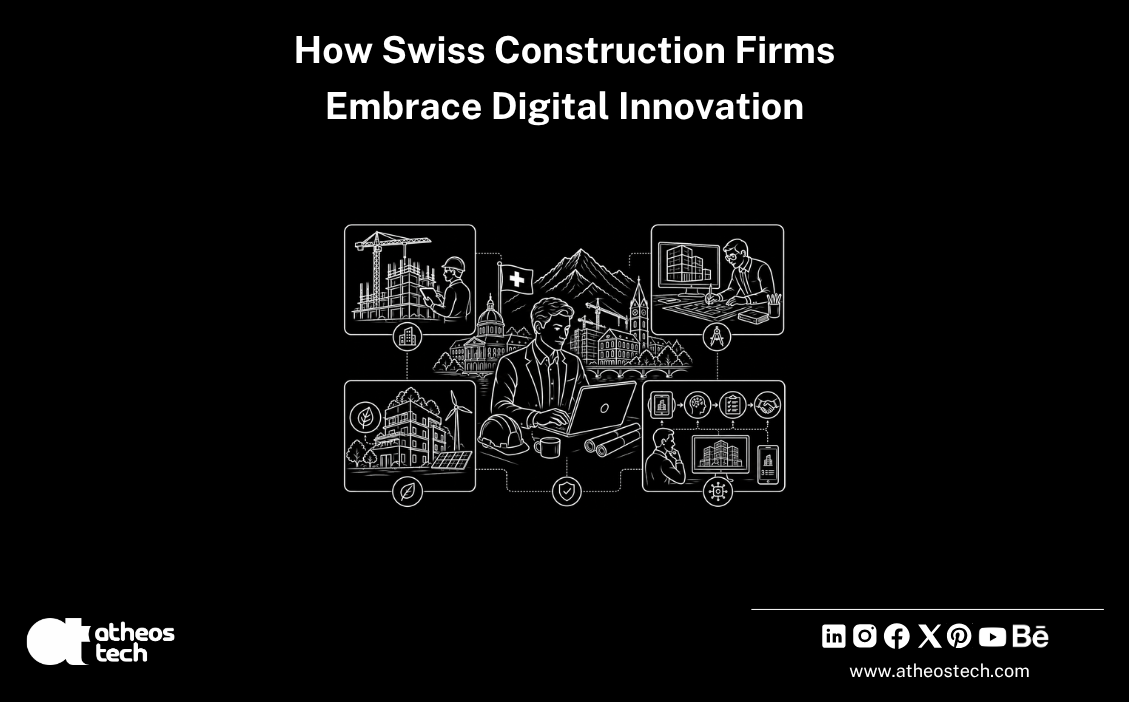
A digital blueprint in the context of Switzerland’s construction industry refers to a centralized, compliance-driven digital infrastructure. This framework allows Generalunternehmer and Architekten to systematically manage cantonal Baugesetze, SIA norms, and Minergie documentation. By digitizing these fragmented regulations into client portals and trilingual SEO architectures, forward-thinking Swiss construction firms turn regulatory complexity into a visible competitive moat.
Navigating the Digital Complexity of Swiss Building
Switzerland has more than 140,000 individual building rules in force nationwide, spread unevenly across 26 cantons that each maintain their own rigid Baugesetz on top of shared federal guidelines and strict SIA norms. Against this heavily fragmented regulatory backdrop, more than 22,000 registered construction enterprises compete for a residential pipeline that has not kept pace with demographic demand in years. In fact, data from the Swiss Association of Master Builders (SBV) indicates that the country requires approximately 50,000 new flats annually just to ease the chronic housing shortage, a structural benchmark last achieved back in 2018.
Financially, the market is expanding. Total construction activity reached almost CHF 23.9 billion in 2025, and the latest SBV economic indicators forecast a further rise to CHF 24.4 billion in 2026. Yet, the vast majority of Generalunternehmer, Handwerksbetriebe, and Architekten actually delivering this pipeline are small, regionally rooted businesses. Many still attempt to win high-value mandates entirely through legacy regional reputation rather than digital visibility.
This creates a profound structural paradox. The biggest competitive obstacle for a growing Swiss construction firm is not the capabilities of another enterprise; it is the sheer weight of complexity itself. The firms dominating the market are not those trying to shout the loudest, but those implementing a sophisticated Switzerland construction industry digital transformation strategy to turn this regulatory gridlock into a digitized asset.
To capture this shifting terrain, a firm must optimize for a highly segmented, AI-driven client journey. Whether navigating the institutional tender pathway on simap.ch, securing residential local trust via geolocated search engines, or pitching a design-led architectural vision across international borders, the modern Bauherr expects immediate digital proof of capability.
When an institutional developer or a private homeowner runs a complex query in an AI engine, generic marketing catchphrases are filtered out completely. The generative summaries prioritize platforms that display explicit, structured project documentation, clear cantonal permit tracking, and localized compliance parameters.
At AtheosTech, we approach this challenge through the lens of deep technical consulting. We recognize that in Swiss construction, a website cannot survive as a static digital brochure. It must serve as an active operational blueprint that bridges the historical gap between exceptional physical craftsmanship and modern digital visibility.
The Hidden Engines Driving Switzerland's Built Environment
Swiss construction is fundamentally a cantonal business wearing a national label. The 140,000-plus building rules that industry bodies like the Swiss Association of Master Builders (SBV) have publicly called to streamline are not a bureaucratic exaggeration. They represent the daily, gritty operating reality for any ambitious firm. A project located in Zurich faces an entirely different set of environmental codes, zoning laws, and material requirements than a nearly identical project located just 20 kilometers away in Aargau. Navigating these 26 distinct Baugesetze, layered tightly on top of shared federal standards and rigorous SIA norms, is precisely why regional expertise still consistently beats national scale in most procurement decisions.
To understand the immense pressure and opportunity within the Switzerland construction industry digital transformation, one must look at the structural data defining the market today:
Swiss Construction by the Numbers:
- 22,000+ registered construction enterprises competing nationwide.
- 140,000+ individual building rules in force across the 26 cantons.
- CHF 24.4 billion forecast construction turnover for 2026.
- 50,000 new flats needed annually just to ease the current housing shortage.
Growth is undeniably real, but it remains heavily geographically concentrated. Zurich, Central Switzerland, and the Lake Geneva area consistently record the strongest increases in construction activity. This growth is primarily driven by sustained population increases and vacancy rates that remain among the lowest in all of Europe. According to market forecasts, the national output value of the sector is projected to climb from EUR 41.06 billion in 2025 to approximately EUR 47.19 billion by 2029.
Within this expansion, residential construction remains the sector’s undisputed primary driver, posting a robust 4.8% growth in 2025 alone. Yet, the gap between supply and demand is widening. The government’s own long-range planning projections are aggressively steep: Switzerland is estimated to need over 500,000 new affordable housing units by 2040. That powerful combination, chronic residential undersupply, hyper-local cantonal construction regulations Switzerland mandates, and a federal government aggressively pushing strict net-zero building targets, creates an unusually durable demand for firms that can clearly and quickly demonstrate their operational fluency online.
Overcoming the Labor Shortage with Digital Efficiency
The renovation and retrofit segment deserves particular attention within this economic picture. A meaningful share of Switzerland’s existing building stock predates modern energy standards. Rising energy costs, combined with aggressive net-zero policy pressure and cantonal subsidies, are pushing both private homeowners and institutional building owners toward Altbausanierung (renovation) at an unprecedented pace.
However, many small Handwerksbetriebe and Architekten are hitting what we call a “Demand Wall.” They are struggling to keep up with the market, but not because of a lack of technical capability or physical craftsmanship. They are failing because they suffer from a severe lack of digital capacity to absorb, filter, and process the inbound demand already knocking on their doors. If a specialized firm ignores Altbausanierung renovation marketing Switzerland strategies and lacks a streamlined Innenausbau portfolio website or a digitized quoting process, they waste dozens of hours each week manually qualifying leads that a smart digital platform could have handled instantly.
Simultaneously, the Swiss construction sector faces a crippling, systemic skilled labor shortage, specifically in the highest-growth cantons. Vocational training pipelines have simply not kept pace with the explosive demand in regions like Zurich and Vaud. This creates one of the most overlooked digital transformation challenges Swiss construction industry leaders face today.
When a Generalunternehmer cannot easily hire more project managers, estimators, or site supervisors to handle the increased workload, construction workforce shortage digital efficiency becomes their only viable growth lever. Digitizing your compliance workflows, automating your client intake, and presenting your portfolio clearly online is no longer just a marketing strategy to get more eyes on your business; it is a fundamental capacity strategy.
Converting the right leads efficiently, rather than simply generating a higher volume of unqualified phone calls, allows a capacity-constrained firm to scale its revenue and profitability without linearly scaling its headcount. At AtheosTech, our dedicated Switzerland market digital solutions are engineered to solve this exact bottleneck. By deploying intelligent best digital tools for Swiss construction firms, we transform your website from a passive, static brochure into an active, operational filter that protects your team’s time and maximizes your project yield.
Turning 140,000 Building Rules into a Competitive Edge
Cantonal fragmentation is the single hardest business problem to solve with a generic, templated digital presence. A standard website simply cannot handle the sheer weight of construction compliance Switzerland demands today. For example, a Generalunternehmer executing projects simultaneously in Zurich, Geneva, and Ticino is not managing a single unified building code. They are navigating three entirely distinct legal environments, all while layering on strict national engineering guidelines and aggressive federal energy mandates.
Firms that can present project-specific compliance methodologies clearly to both cantonal authorities and prospective clients are navigating approval processes significantly faster. Conversely, firms that rely solely on the scattered, undocumented institutional memory of their senior project managers are facing massive bottlenecks. By transforming regulatory obligations into a visible digital asset, forward-thinking builders turn a frustrating administrative burden into a unique selling proposition.
To understand the digital infrastructure required, construction leaders must map the specific regulations driving this technological shift:
| Regulation / Standard | Current Status | The Required Digital Infrastructure |
|---|---|---|
| Cantonal Baugesetze (26 cantons) | Ongoing, no unification planned | Project-specific digital compliance tracking adaptable across multiple jurisdictions. |
| SIA Norms (National Engineering) | Continuously updated | Standardized, SIA norm documentation software integrations across design and execution phases. |
| revDSG (Swiss Data Protection) | Live since Sept 2023 | Robust revDSG construction data protection and secure client data governance protocols. |
| ISG / Cybersecurity Reporting Duty | Full enforcement Jan 1, 2027 | ISG cybersecurity reporting construction firms require for rapid cyber incident tracking and institutional compliance. |
| Net-Zero 2050 / Minergie Targets | Ongoing and tightening | Detailed sustainability documentation and real-time energy-performance reporting presented as a core sales asset. |
Industry bodies, notably the SBV, have repeatedly and publicly lobbied for a broad reduction in the grounds for formal objections. They are advocating for faster planning approvals and a structural streamlining of the building rules themselves. However, the pragmatic reality of the market is that until this federal simplification occurs, complexity remains your competitive moat.
Furthermore, aligning with the net-zero 2050 Switzerland building targets is no longer just a political talking point. It is a financial imperative. Certifications like Minergie and Minergie-P, while technically voluntary, have evolved into powerful commercial signals. In a market where exceptional energy performance increasingly dictates favorable mortgage terms and maximizes property resale value, sustainability is a primary financial metric for developers.
Firms that provide easily accessible Minergie certification digital documentation and detailed energy-performance pathways online capture the attention of high-value buyers. Burying vague sustainability claims in standard marketing copy no longer works. To understand exactly how these standards shape building value, you can review the official Minergie building standards guidelines which highlight the exact documentation modern developers expect to see.
The Anatomy of a Fully Compliant Digital Platform
What does compliance-by-design actually look like when a prospective Bauherr or institutional partner visits your website? It means your digital footprint operates as an active compliance artifact, not just a portfolio of pretty buildings.
For a firm aiming to dominate multiple cantons, cantonal Baugesetz digital compliance means building dedicated project pages or gated client areas that explicitly track permit stages. Instead of a client emailing a project manager for an update, they log into a secure environment where the documentation trail is perfectly organized. This level of transparency instantly establishes massive trust.
Additionally, the sheer volume of sensitive architectural blueprints, financial contracts, and client data flowing through these systems brings serious data security obligations to the forefront. A custom-built client portal construction firm Switzerland framework ensures that data governance is baked directly into the user experience, shielding the firm from costly breaches and regulatory fines. With the 2027 deadline approaching for critical infrastructure suppliers to implement rapid incident reporting, proving your digital resilience today is a massive differentiator to institutional buyers who assess risk rigorously.
At AtheosTech, our Web & App Engineering team specializes in building these highly secure, compliance-ready platforms. We design intuitive interfaces that translate complex SIA norms and cantonal workflows into seamless client experiences, ensuring your firm looks as precise online as it builds offline. If your current website cannot visibly demonstrate your firm’s compliance fluency, you are actively losing pitches to competitors who can.
Mapping the Three Distinct Swiss Procurement Pathways
Swiss construction procurement often still closes on a firm handshake and regional trust, but the critical shortlisting process has shifted decisively online. More importantly, this shortlisting happens across multiple languages and distinct psychological pathways. A unified, generic digital strategy completely fails in this environment. A homeowner urgently searching for a heat pump installer evaluates a firm using entirely different criteria than a cantonal procurement officer managing a multi-million-franc infrastructure project.
To capitalize on the construction procurement digital shift, a Founder must recognize that their digital footprint is not speaking to one unified audience. Instead, it must be architected to intersect with three entirely distinct buyer journeys. Understanding how your specific trade aligns with these pathways is the key to converting regional reputation into measurable digital visibility.
The Pre-Qualification Playbook for Major Mandates
For firms pursuing public infrastructure, civil engineering, and large-scale corporate developments, the digital journey revolves around strict, formal gatekeepers. In this lane, institutional tender construction Switzerland projects are heavily mediated by formal procurement portals. The undisputed center of gravity here is simap.ch, the official Swiss public procurement platform, where cantons, the SBB, energy utilities, and major corporate Bauherren publish their mandates.
In this journey, buyers are completely immune to flashy homepage marketing. They are evaluating structural competence. The primary hurdle is navigating strict simap.ch pre-qualification requirements. Procurement officers are looking for structured, verifiable data. They scrutinize your digital track record, ISO certifications, and detailed prior-project documentation.
For firms looking at how to win simap.ch tenders with digital documentation, the answer lies in treating your case studies as formal compliance evidence rather than mere marketing collateral. If you are pursuing Tiefbau simap.ch tenders, your website must act as a seamless extension of your tender application. Firms that maintain a constantly updated, highly structured digital repository of past project outcomes are consistently pre-qualifying for lucrative tenders before slower competitors even realize the mandate exists.
The Hyper-Local Conversion Engine for Swiss Trades
The second pathway is hyper-local and deeply personal. This is the residential contractor local trust Switzerland journey, driven by private homeowners, small property investors, and local facility managers. When analyzing Bauherr research behavior construction metrics in the residential space, the data is clear: decisions are driven by immediate local validation and speed of response.
In this lane, your website is often the second touchpoint. The first is almost always Google. Google Business Profile reviews construction firm rankings act as the ultimate digital word-of-mouth. A homeowner looking to renovate an Altbau or seeking a local specialist will heavily weigh the density and recency of your local reviews.
For example, a heat pump installer digital marketing Switzerland strategy that ignores local review generation will fail, regardless of how beautifully designed their website is. Buyers here are evaluating responsiveness, local reputation, clear before-and-after visual proof, and the speed at which they can secure a quote. A digital strategy for this journey must bridge the gap between regional reputation vs digital visibility, ensuring that when a neighbor recommends your firm, the subsequent Google search instantly validates that recommendation with five-star social proof and a frictionless contact portal.
Projecting Design Authority Across Cantonal Borders
The third pathway is defined by visual authority and complex regulatory competence. This is the design-led architecture firm's cross-border Switzerland journey. The buyers here include corporate developers, institutional investors, and international commissioning clients looking to build in Switzerland.
For these high-value buyers, LinkedIn serves as a primary trust channel, followed by deep dives into an Architekten BIM multilingual portal or digital portfolio. However, visual aesthetics alone are no longer enough. The core evaluation criteria in this pathway demand a hybrid proof of capability. A firm must demonstrate exceptional design credibility right alongside demonstrated multi-cantonal regulatory fluency.
If an architecture firm presents a stunning visual portfolio but fails to document how they navigated strict SIA norms or cantonal zoning laws to get the structure built, the portfolio reads as a collection of beautiful but unproven renderings. Clients want to know how BIM helps architects win international commissions by de-risking the execution phase. The firms converting in this space are using their digital platforms to prove they can not only design a masterpiece but also legally and technically deliver it within the strict confines of Swiss building regulations.
The Foundation for the Seven Trades
These three distinct journeys perfectly illustrate why a flat, one-size-fits-all website fails in the Swiss construction sector. The specific digital tools, SEO strategies, and compliance documentation you need depend entirely on who is actually buying your services.
As we explore the seven specific sub-industries below, keep these three pathways in mind. Almost every trade lives primarily in one of these three lanes, while the imperative of sustainable building cuts forcefully across all of them. To see how AtheosTech architects these specific buyer journeys into high-converting platforms, explore our dedicated Switzerland market digital solutions and learn how we align your digital presence with your most profitable client base.
THE SEVEN TRADES, ORGANIZED BY WHO'S ACTUALLY BUYING
To truly understand how digital transformation impacts Swiss construction, we must move past generic categorizations and analyze the sector based on how revenue is actually generated. The seven core trades below are not simply different technical disciplines; they operate within fundamentally different buyer journeys. A strategy that works brilliantly for an interior design firm will actively sabotage a civil engineering contractor. We have organized these trades into four primary categories based on the buyer psychology and digital infrastructure required to convert leads into active mandates.
6A. The Institutional and Tender-Driven Trades
In this tier, trust is verified formally. The buyers, cantonal governments, the SBB, energy utilities, and large corporate developers, do not rely on Google reviews. They rely on structured data, verifiable compliance histories, and rigorous tender pre-qualifications.
General Contractors (Generalunternehmer)
The regulatory reality for a Swiss Generalunternehmer (GU) is arguably the most complex of any trade in the country. A GU carries the full, concentrated weight of multi-jurisdiction permitting. When managing a commercial development that spans across cantonal lines, for example, a logistics hub that touches both Zurich and Aargau, the GU is not just building a structure; they are orchestrating a massive compliance matrix. They must ensure that every subcontractor adheres to specific cantonal construction regulations Switzerland mandates, coordinate rigid SIA documentation, and manage the compounding complexity of revDSG data protection protocols for hundreds of site workers and stakeholders.
The buyer psychology here has shifted dramatically in recent years. Institutional Bauherren (building owners and developers) simply no longer accept opaque, paper-based project management. In an era where a developer can track a CHF 20 package to their doorstep in real-time, they refuse to accept a multi-week lag in updates on a CHF 20 million construction site. They expect a seamless, digitized overview of the project's compliance status, schedule, and budgetary health. They are buying operational certainty just as much as physical construction.
The critical digital gap for most GUs is the reliance on isolated, fragmented software, or worse, the institutional memory of a single senior project manager. When a GU attempts to expand into a new canton, they often rebuild their compliance and permitting approach from scratch, losing critical speed. The firms that are aggressively capturing market share have developed a digitized, per-canton compliance playbook. This digital blueprint is an adaptable, software-driven framework rather than a static document. What converts these institutional buyers is logging into a secure project tracking software Generalunternehmer portal during the pitch phase and seeing exactly how the firm systematically de-risks the permitting process before breaking ground.
The competitive pressure is intense for firms clinging to legacy methods. Without a repeatable, digitized playbook, a GU cannot scale profitably across cantonal borders. The overhead of managing localized regulations manually destroys their profit margins on complex projects.
Our Web & App Engineering builds the bespoke project tracking systems and client portals that institutional Bauherren demand, paired with deep Strategy & Consultation to map your multi-cantonal compliance workflows into the software architecture.
Civil Engineering (Tiefbau)
For civil engineering (Tiefbau) firms, the regulatory and procurement reality is rigidly formal. The buyer pool is highly concentrated, consisting of cantons, federal agencies, and major utilities. The procurement processes are largely digitized and heavily regulated, running almost exclusively through simap.ch, the national electronic public procurement platform.
The buyer psychology in this tier is purely analytical. There is no impulse buying in civil engineering. A small number of large, highly sophisticated clients evaluate bids based on strict scoring matrices. In this environment, generic lead generation tactics are useless. Authority content and verifiable track records matter more than any traditional marketing campaign.
The glaring digital gap for many Tiefbau firms is treating their website like a static corporate brochure rather than a dynamic repository of formal project outcomes. The firms that are dominating infrastructure mandates treat simap.ch tender readiness documentation as a continuous digital discipline. What converts at the pre-qualification stage is a digital presence that provides exhaustive, structured case studies. These studies must explicitly detail how previous complex mandates were delivered on time, the specific SIA norms adhered to, and how localized environmental regulations were managed.
Firms without a clearly documented, easily accessible digital track record are being aggressively excluded before a tender is even fully visible. If an evaluator cannot verify a firm's capability to handle a CHF 50 million infrastructure project within the first few clicks on their website, that firm will not pass the initial shortlisting phase.
We provide strategic consulting for simap.ch readiness audits and leverage our Digital Growth & Marketing services to structure your past-project outcomes into authoritative, tender-winning digital case studies.
The Residential and Local-Trust Trades
This category is driven by private homeowners, small property investors, and local SME owners. Decisions are made rapidly, heavily influenced by localized social proof, speed of communication, and visible craft quality.
Specialised Trade (Haustechnik)
Haustechnik firms, encompassing electrical, heating, ventilation, and plumbing trades, sit squarely at the center of Switzerland's massive net-zero retrofit push. The demand for heat pump installations and energy-efficient upgrades is surging exponentially, driven by government incentives and rising fossil fuel costs.
The buyer psychology here is urgent and research-driven. A homeowner facing a failing oil boiler wants a solution immediately, but they also want to maximize their cantonal subsidies. They are overwhelmed by the technical jargon of Minergie standards and energy coefficients.
The critical digital gap is speed and clarity. Many Haustechnik firms still require a homeowner to call during business hours, wait days for a site visit, and wait weeks for a manual quote. The firms absorbing this massive demand surge are those deploying instant quoting tool Haustechnik widgets directly on their websites. What converts is frictionless access to pricing estimates combined with clearly published cantonal construction regulations Switzerland and subsidy guidance. A homeowner will almost always choose the firm that allows them to instantly estimate their heat pump installation cost and clearly explains the specific financial incentives available in their exact canton.
The competitive pressure is unique: demand already vastly outstrips visible supply. The firms losing out are not failing due to a lack of technical skill; they are losing homeowners to faster, digitally optimized competitors because their manual quoting processes act as a massive bottleneck.
Our engineers build sophisticated, localized quoting tools and pair them with aggressive heat pump installer digital marketing Switzerland strategies to dominate local SEO rankings.
Renovation & Restoration (Altbausanierung)
The renovation and Altbausanierung segment is experiencing a historic boom. Major industry players attribute massive revenue growth directly to this renovation demand, which is currently outpacing new builds in many established cantons.
Buyers in this space, often private owners of heritage properties or aging apartment blocks, are highly risk-averse. Renovating a 100-year-old Swiss property involves navigating strict heritage protection laws (Denkmalschutz) and complex structural uncertainties. Their psychology is rooted in localized trust. They want absolute assurance that the firm has successfully managed similar historic properties in their specific area.
The digital gap is a lack of localized trust signals. Generic national marketing completely fails here. What converts is hyper-local SEO, a dense concentration of five-star Google Business Profile reviews, and meticulous before-and-after documentation. Swiss renovation firm local SEO strategy must focus on highly specific keywords related to local heritage restoration. A firm specializing in Altbausanierung has a distinctly different skill set from a standard new-build contractor, yet they often fail to communicate this specialization digitally, leaving them underserved and invisible to high-paying clients.
We utilize Digital Growth & Marketing to dominate your local trust signals and deploy exceptional UI/UX frameworks to showcase your before-and-after project transformations compellingly.
Interior Design & Fit-out (Innenausbau)
Commercial and residential Innenausbau firms compete almost entirely on visual craft and portfolio quality. Whether fitting out a luxury boutique in Geneva or a high-end chalet in Zermatt, the deliverable is highly aesthetic.
The buyer psychology is emotionally driven and highly visual. A corporate client or affluent homeowner is buying a vision and a feeling. They evaluate a firm based on the polish, sophistication, and narrative of their previous work.
The glaring digital gap in this niche is the continued reliance on static, outdated portfolio presentations, or worse, the still-common practice of sending a "PDF portfolio on request." The gap between the actual physical craftsmanship and the poor digital representation of that craft is unusually wide in this sector. What converts right now are immersive, high-quality project photography, video walkthroughs, and interactive digital lookbooks. If a firm possesses objectively comparable craftsmanship but relies on a clunky website, they will consistently lose pitches to competitors with stronger visual storytelling.
Our UI/UX & Creative Design team transforms your digital presence into a premium, portfolio-driven experience, backed by social visibility campaigns to showcase your interior fit-out company website Switzerland-wide
The Design-Led and Cross-Border Trade
This category bridges the gap between high-end aesthetics and rigorous technical compliance, often dealing with complex, multi-national stakeholders.
Architecture Firms (Architekten)
Swiss Architekten operates at the precise intersection of visionary design and rigid multi-cantonal regulatory fluency. Today, they are increasingly competing for lucrative international mandates or cross-cantonal corporate headquarters where a strong digital portfolio is no longer a bonus, it is the qualifying entry ticket.
The buyer psychology for international developers and institutional investors is dual-faceted. They want world-class Swiss design, but they are terrified of the 140,000+ local building rules. They evaluate an architecture firm not just on their renderings, but on their proven ability to navigate the complex cantonal Baugesetz digital compliance landscape.
The critical digital gap is treating the website purely as an art gallery. Design reputation alone no longer guarantees cross-cantonal commissions. What converts is proving operational competence alongside design talent. Firms that integrate BIM presentation website Architekten tools to allow clients to explore 3D models interactively are winning. Furthermore, deploying multilingual client portals and publishing detailed case studies that explicitly walk through how the firm navigated strict SIA norms to get a radical design approved proves that the firm is a safe, capable partner for a CHF 100 million investment.
We provide BIM-forward UI/UX & Creative Design to showcase your architectural vision and engineer the trilingual construction website Switzerland infrastructure needed to communicate with international stakeholders.
The Cross-Cutting Trade: Sustainable / Green Building
Unlike the previous trades, sustainable building (nachhaltiges Bauen) does not have a single, isolated buyer journey. It forcefully cuts across all of them. The aggressive federal push toward net-zero targets and Minergie certification have moved sustainability from a differentiator to a baseline requirement.
Whether an institutional developer is evaluating a GU on simap.ch, or a homeowner is searching for a heat pump installer, sustainability credentials are a primary decision factor. The digital gap here is the proliferation of generic "greenwashing" marketing copy. Broad claims about "caring for the environment" do not convert cautious Swiss buyers.
The massive content opportunity lies in specificity. Canton-by-canton subsidy guidance, detailed pathways to Minergie certification, and clear explanations of SIA norm compliance documentation are high-intent topics that are currently vastly underserved online. Firms that publish genuinely specific, localized guidance on how to navigate energy subsidies become the immediate reference destination for developers and homeowners alike. Specificity is what converts in every single lane.
We deploy targeted Digital Growth strategies and content architectures that position your sustainable building firm Switzerland content as a foundational layer, strengthening your authority across all buyer journeys simultaneously.
Bridging the Gap Between On-Site Excellence and Online Authority
Swiss construction is globally renowned for its uncompromising precision and technical excellence. Whether it is a complex civil engineering project in the Alps or a bespoke interior fit-out in Geneva, the physical craftsmanship is rarely the problem. However, a glaring paradox exists across the industry. When you examine the digital presence of these highly skilled firms, the presentation is frequently outdated, fragmented, and fundamentally amateurish. We identify this severe business bottleneck as the craft-to-communication gap.
This gap is particularly visible within the residential and design-led trades we just explored. In the financial sector, the primary digital risk is utilizing a generic platform that makes a boutique firm look like a mass-market clone, thereby undermining trust. In the Swiss construction industry, the risk is the exact opposite. The danger is a catastrophic failure to display genuine, hard-earned expertise. When a firm possesses exceptional technical capability but presents a vague, poorly constructed digital footprint, prospective clients are forced to assume a lack of competence they cannot verify.
Consider the modern Bauherr research behavior construction journey. An institutional developer or a high-net-worth homeowner cannot physically inspect your previous concrete pours, touch the bespoke joinery, or review your cantonal permit approvals before deciding to invite you to a pitch. During the critical shortlisting phase, they are entirely blind to your physical craftsmanship.
Because a physical site visit is impossible at this early stage, your digital platform must serve as the ultimate, undeniable substitute. For an interior fit-out company website Switzerland market leaders rely on, high-resolution photography and immersive video walkthroughs are not optional aesthetic upgrades. They are fundamental sales tools. For an architecture firm, interactive BIM presentations and a heavily documented construction firm case study SIA compliance breakdown are the only tangible ways to prove that your operational execution matches your design vision.
The most frustrating business pain point for any construction Founder is losing a lucrative mandate to a competitor who possesses objectively inferior technical skills but superior visual storytelling. If your competitor has invested in the best digital tools for Swiss construction firms to showcase their portfolio, while you still rely on emailing PDF brochures upon request, the client will naturally gravitate toward the firm that provides immediate visual certainty. You are not losing on capability; you are losing on communication.
This specific disconnect is where AtheosTech’s strategic approach proves its measurable value. While our engineering teams focus on compliance portals and project tracking, our UI/UX & Creative Design teams focus on closing this craft-to-communication gap. We do not just design attractive websites. We architect a digital blueprint that translates your physical excellence into undeniable digital proof.
We structure your digital portfolio to highlight the minute details of your craftsmanship while simultaneously proving your regulatory fluency. By integrating advanced visual tools and structuring your past projects into compelling, authoritative narratives, we ensure that a prospective client experiences the quality of your work long before they ever step foot on your construction site. For more context on how professional presentation standards are evolving, you can review the Swiss Society of Engineers and Architects (SIA) digital standards, which emphasize the growing need for rigorous, digitized project documentation.
Scaling Your Firm Beyond the Local Postal Code
At AtheosTech, we constantly hear a specific objection from regional Swiss construction firms. Founders often state that their work speaks for itself and that clients come through the same cantonal network they always have. This has genuinely been true for generations, and it reflects something profoundly real about how trust operates in Swiss business culture.
What has changed is not the importance of reputation. What has changed is exactly where that reputation gets verified. Today, a Bauherr who hears your firm’s name from a trusted cantonal contact will still immediately search your name online before making the first call. What they find on your website either confirms or quietly undermines the referral they just received. The modern battle of regional reputation vs digital visibility is no longer an either-or scenario; they are entirely co-dependent. If your digital presence looks outdated, the prospect subconsciously questions if your building methods are equally behind the times.
The second objection is both linguistic and geographic. Firm owners frequently ask why they should invest in a nationally visible digital presence if they only operate in one canton and speak one language. This leads directly to a highly debated industry question: does a single canton construction firm need a multilingual website?
For firms genuinely committed to staying small and serving only local residential homeowners within their immediate postal code, a single-language site might suffice. However, it is vital to be ruthlessly honest about the hidden cost of this decision. Single-canton firms operating exclusively in one language are voluntarily excluding themselves from a massive, growing pool of cross-cantonal institutional developers, corporate boards, and real estate investment trusts.
These sophisticated entities now routinely search and shortlist vendors far beyond their own home canton. For instance, a Geneva-based investment fund developing a commercial property in Zurich will conduct their initial vendor research in French or English. If your Swiss Generalunternehmer digital marketing strategy restricts your visibility to German only, you are completely invisible to the actual decision-makers funding the project. Capital in Switzerland is highly mobile. You can explore broader economic data on cross-cantonal building investments through the Swiss Federal Statistical Office (FSO) to see exactly how real estate capital frequently flows across regional linguistic borders.
This dilemma forces a construction firm to revisit the three distinct client journeys we mapped out earlier. You must ask yourself which journey your firm is actually equipped to win today. Are you content competing solely in the residential local-trust journey, or do you have the technical capacity to win in the institutional tender and design-led routes?
If you want to capture institutional or cross-border mandates, your digital footprint must match that ambition. A single-canton mindset trapped in a single-language website simply cannot compete for national capital. The firms that win are those that project operational scale before they even submit a bid.
At AtheosTech, our Strategy & Consultation experts help founders diagnose this exact misalignment. We conduct deep revenue engineering audits to map out exactly which cantons, languages, and buyer journeys your firm is currently leaving on the table, and we build the precise digital infrastructure required to capture them.
Three Languages, One Uncompromising Standard
In the Swiss construction ecosystem, operating across linguistic borders is the ultimate test of a firm’s operational maturity. The trilingual reality of German, French, and Italian is the defining content constraint for any business with ambitions beyond its home canton. Building a highly effective Swiss construction firm website trilingual SEO architecture is not merely a marketing upgrade. It is a strict market-access requirement. Capital flows fluidly across cantonal lines, but it only lands with firms that can communicate flawlessly in the buyer’s native language.
Many firms attempt to solve this linguistic challenge by relying on automated translation plugins or direct, mechanical translations of their primary German website. This approach fails spectacularly. Direct translation strips away cultural context and regional nuance. A French-translated page that uses rigid Swiss-German sentence structures reads as entirely foreign and disconnected to a prospective client in Suisse Romande. To truly penetrate these markets, content must be independently authored in the exact way local clients actually speak and search. The firms winning lucrative cross-cantonal work structure their content separately for each language region, ensuring that the local search intent is captured perfectly.
Technical Vocabulary: Where Precision Equals Credibility
Beyond cultural tone, the Swiss construction industry relies on an incredibly rigid technical vocabulary. SIA norms, Minergie certification tiers, and hyper-local permitting terms carry exact, legally binding meanings. Generic translation tools and standard marketing agencies routinely misinterpret this highly specialized jargon.
When an institutional Bauherr or a lead Architekt evaluates a trilingual construction website Switzerland market leaders deploy, they are actively scanning for regulatory fluency. If they spot a mistranslated technical term regarding fire safety codes, load-bearing SIA standards, or complex heat pump coefficients, your firm’s credibility collapses instantly.
In this highly regulated sector, a mistranslation is not viewed as a simple typo. It is interpreted as concrete evidence that your firm has never actually operated in that specific region and does not understand the local engineering requirements. Precision in your trilingual technical content acts as a primary, undeniable trust signal.
To understand just how complex and legally binding these standardized terms are, you can reference the official Swiss Society of Engineers and Architects (SIA) norms. Their guidelines dictate the precise engineering and architectural vocabulary required across all three national languages, leaving absolutely zero room for linguistic errors in your digital portfolio.
At AtheosTech, we treat language as a critical component of your compliance infrastructure. Our Digital Growth & Marketing experts do not just translate your website. We architect a bespoke, language-specific digital strategy from the ground up. We ensure that your technical documentation, compliance case studies, and localized SEO keywords are flawlessly localized for both user intent and strict engineering accuracy. If you are ready to expand your cantonal footprint without losing your hard-earned technical authority, explore our comprehensive Switzerland market digital solutions to see how we build uncompromising, high-trust trilingual platforms.
Why a Generic Digital Presence Fails in a Fragmented Cantonal Market
A clone platform is an off-the-shelf, white-labeled digital solution. In the construction sector, these already exist in abundance. They manifest as generic project management SaaS tools, templated contractor websites, or pre-built quoting widgets that are simply reskinned with a firm’s logo. These platforms are typically built for unified markets like the United States or the broader European Union, and they attempt to force a highly specialized Swiss Generalunternehmer or Architekt into a rigid, mass-market digital mold.
This approach fails spectacularly in Switzerland because it directly undercuts the reality of cantonal fragmentation. If your firm claims to have cross-cantonal capability but presents a translated-only website lacking local compliance details, a prospective Bauherr reads this as concrete evidence that you have never actually executed a project in their specific region. For institutional buyers, the standard is even stricter. Evaluators on simap.ch require highly structured documentation histories and verifiable proof of competence. A beautifully designed but generic template simply cannot fulfill this rigid requirement.
How Clients Actually Notice the Gap
Clients notice this lack of localization almost immediately, though they rarely tell you directly. The business pain point surfaces when a successful firm attempts to expand into a new canton using their unchanged, generalized messaging. They suddenly find themselves getting shortlisted far less frequently than entrenched local competitors.
Those local competitors win because they present visibly canton-specific case studies. They detail exactly how they navigated the local Baugesetz and secured the necessary environmental permits. When a buyer compares a highly specific local firm against a generic "national" competitor, they will almost always choose the firm that demonstrates localized operational certainty. Trying to bypass this reality is one of the most expensive digital transformation challenges Swiss construction industry leaders face today. For a deeper understanding of how federal and cantonal planning regulations diverge and require specific approaches, you can review the official Swiss federal spatial planning framework.
The Custom-Built vs. Templated Tradeoff
Many construction founders opt for off-the-shelf, templated websites to save on initial costs. While this is cheaper in the short term, it creates an inflexible digital ceiling that prevents actual business growth. A generic template cannot accommodate complex, gated client portals. It cannot integrate seamless cross-cantonal construction project tracking software, and it forces your trilingual content into a clunky, compromised structure.
Choosing a custom-built digital platform is a strategic positioning decision. A bespoke build allows you to architect a true digital blueprint that accurately reflects the sophistication of your physical craftsmanship. It gives you the infrastructure to manage complex compliance data securely while presenting a flawless, localized face to every canton you target.
The AtheosTech Approach: Architecture from Day One
At AtheosTech, we completely reject the generic template model for Swiss construction clients. Our approach relies on engineering a trilingual, per-canton content architecture from day one. We build systems that allow you to seamlessly display localized case studies, deploy specialized quoting tools, and integrate the exact compliance documentation required for institutional tenders.
Our Web & App Engineering team works alongside our digital growth experts to ensure that when a buyer in Geneva searches for your services, they experience a platform built explicitly for the Suisse Romande market. If you are ready to discard generic templates and build a digital asset that actually wins multi-cantonal mandates, explore our comprehensive Switzerland market digital solutions to see how we architect platforms designed for structural growth.
The 2027 Deadline: Data Governance and Cyber Trust
In the modern Swiss construction landscape, data governance is no longer just a back-office IT concern. It is a fundamental pillar of client trust. The revised Swiss Data Protection Act (revDSG) has already fundamentally changed how client and project data must be handled. However, an even more stringent regulatory horizon is rapidly approaching. The Information Security Act (ISG) imposes a mandatory cyber incident reporting duty, with full enforcement scheduled for January 1, 2027. This mandate requires critical infrastructure suppliers and large-scale construction enterprises to report significant cyberattacks to the National Cyber Security Centre (NCSC) within strict timeframes.
For a Generalunternehmer or an Architekt managing multi-cantonal institutional work, this 2027 deadline forces a complete reevaluation of their digital infrastructure. The ISG cybersecurity reporting construction firms must comply with is not a simple administrative checklist. It requires a proactive, highly secure digital environment capable of rapid threat detection and response.
Why Data Breaches Are Trust-Collapse Events
Consider the sheer volume of sensitive data flowing through a major Swiss construction project. A single commercial development involves proprietary architectural blueprints, highly sensitive financial models, detailed subcontractor agreements, and the personal data of hundreds of site workers. If a firm relies on unencrypted emails, consumer-grade file-sharing links, or fragmented legacy software to manage this data, they are operating with a massive vulnerability.
When an institutional Bauherr awards a CHF 30 million mandate, they are entrusting the firm with critical corporate intelligence. If that project documentation is lost, ransomed, or breached, it is not merely an IT inconvenience. It is a catastrophic trust-collapse event. Word of a severe data breach spreads rapidly across cantonal networks, permanently damaging a firm’s reputation and immediately disqualifying them from future institutional tenders.
To mitigate this risk, forward-thinking firms are investing heavily in revDSG construction data protection architectures. They are abandoning fragmented communication tools in favor of unified, encrypted systems. A custom-built client portal construction firm Switzerland framework ensures that all project communications, permit approvals, and financial documents are stored within a highly secure, access-controlled environment. This level of visible security does more than just satisfy the upcoming 2027 ISG mandates. It proactively proves to risk-averse developers that your firm possesses the operational maturity to protect their most valuable assets.
If your current digital infrastructure cannot guarantee institutional-grade data security, your firm is exposed to severe regulatory and reputational risks. To learn how we engineer impenetrable digital environments for the construction sector, explore our Web & App Engineering services and discover how we build trust through secure architecture.
Engineering Your Firm's Digital Dominance
In a market defined by 140,000 building rules and strict linguistic borders, out-of-the-box software simply cannot manage the structural complexity of Swiss construction. The firms that scale successfully are those that build custom digital infrastructure designed specifically for their operational reality. This is precisely where AtheosTech operates. As a Founder-led IT consulting firm, we engineer digital ecosystems that eliminate conversion friction and position your firm as an undisputed authority.
Our core methodology is built upon a “Consult First, Build Later” philosophy. We refuse to write a single line of backend code until your commercial objectives and compliance workflows are entirely clear. We map the exact jurisdictional and buyer-journey gaps in your current digital footprint before any technical build begins. This ensures your investment directly addresses the specific cantonal bottlenecks costing you high-value mandates.
Our specialized service stack is meticulously mapped to address the unique challenges of the Swiss financial ecosystem and construction sector:
Strategy & Consultation
We begin by mapping exactly which cantons, languages, and buyer journeys your firm is realistically leaving on the table. Are you heavily reliant on the residential local-trust route but completely invisible to institutional buyers on simap.ch? Our strategic consulting teams audit your current capabilities against cantonal construction regulations Switzerland standards to identify the precise structural gaps in your client acquisition process. We define a rigorous, risk-managed digital blueprint dedicated entirely to measurable ROI.
Web & App Engineering
Our engineering division builds the robust digital infrastructure required for modern construction management. We develop secure, encrypted client portal construction firm Switzerland architectures that handle highly sensitive project data under strict revDSG compliance. From deploying cross-cantonal construction project tracking software for Generalunternehmer to building sophisticated instant quoting tool Haustechnik widgets for specialized trades, we engineer the custom backend systems that institutional Bauherren and modern homeowners increasingly demand.
UI/UX & Creative Design
The visual presentation of your craftsmanship instantly communicates your level of authority to the Swiss market. We close the massive craft-to-communication gap by building sophisticated, high-performance portfolios. By utilizing advanced design methodologies like Spatial UI and precise visual hierarchies, we ensure your Innenausbau portfolio website or your BIM presentation website Architekten platform projects absolute premium capability. We transform technical engineering data into immersive, highly persuasive visual narratives.
Digital Growth & Marketing
Once the infrastructure is built, we focus on capturing targeted market share. We deliver the strict Swiss construction firm website trilingual SEO architecture required to dominate German, French, and Italian search intents flawlessly. We engineer localized reputation campaigns to secure high-value Google Business Profile reviews for residential trades while simultaneously structuring your past project outcomes into authoritative, tender-winning case studies for institutional evaluation.
At AtheosTech, we do not just build websites. We build operational scale. If your firm is ready to transition from manual compliance tracking to a fully digitized, highly profitable operational framework, explore our comprehensive Switzerland market digital solutions to see how we engineer digital dominance.
Where to Start: Taking Action in a Verification-Driven Market
For a Swiss construction leader reading this today, the most critical next step is not launching a massive rebranding campaign or investing in generic software. The highest-leverage first step is an honest, data-driven audit of your current digital visibility. You must evaluate exactly which of the three distinct buyer journeys (institutional, residential, or design-led) your firm is genuinely equipped to win today.
Are you actively bidding for public infrastructure projects but lacking the structured simap.ch tender readiness documentation required to pass the first pre-qualification round? Do you have the technical capacity to execute an Altbausanierung in Vaud but find yourself completely invisible because your French content is poorly translated? A firm that possesses strong German content but lacks a French presence is not consciously choosing to avoid the Suisse Romande market. They are simply invisible there, which is a highly fixable operational flaw.
Identifying these specific cantonal and linguistic blind spots is the sole focus of our initial diagnostic audit. We map exactly where your digital presence fails to support your physical craftsmanship, providing you with a clear, prioritized roadmap for structural growth.
This root guide establishes the foundational realities of the Swiss construction digital ecosystem. To provide you with actionable intelligence for your specific niche, AtheosTech is rolling out seven deep-dive sub-pillar guides. These upcoming resources will focus exclusively on the specific services, compliance pathways, and engagement models relevant to each trade:
- The Generalunternehmer Playbook: Digitizing Multi-Cantonal Compliance
- The Tiefbau Strategy: Structuring Data for simap.ch Pre-Qualification
- The Haustechnik Engine: Scaling Lead Capture in the Retrofit Boom
- The Altbausanierung Guide: Building Local Trust for Heritage Renovations
- The Innenausbau Portfolio: Closing the Craft-to-Communication Gap
- The Architekten Framework: BIM, Multilingual Portals, and International Mandates
- The Green Building Blueprint: Turning Minergie Certification into a Sales Asset
FAQs
FAQs
There are more than 140,000 individual building rules currently in force across Switzerland. These are spread unevenly across 26 distinct cantons, each maintaining their own specific Baugesetz, which sits on top of shared federal environmental standards and national SIA engineering norms.
A cantonal Baugesetz dictates local zoning laws, specific environmental restrictions, and the rigid permitting processes required to break ground in a specific region. In contrast, the Swiss Society of Engineers and Architects (SIA) norms provide the standardized, national technical and engineering guidelines for how a structure must actually be designed and safely constructed.
Minergie is technically a voluntary national building standard. However, because the federal government is aggressively pushing toward net-zero 2050 targets, Minergie certification has evolved into a baseline commercial expectation. Properties meeting these standards secure better mortgage rates, benefit from cantonal subsidies, and command significantly higher resale values. For more context on these strict energy targets, you can review the Swiss Federal Office of Energy (SFOE) guidelines.
Simap.ch is the official electronic platform for public procurement in Switzerland. Any construction firm, particularly Tiefbau (civil engineering) contractors and large Generalunternehmer, pursuing public infrastructure, cantonal mandates, or projects funded by the SBB or major energy utilities must use this platform. Success here requires highly structured digital documentation and a verifiable track record, not just standard marketing.
Yes. The revised Swiss Data Protection Act (revDSG) applies rigorously to construction firms. A Generalunternehmer processes massive amounts of highly sensitive data, including proprietary architectural blueprints, corporate financial models, subcontractor agreements, and the personal data of site workers. Handling this data securely via encrypted client portals is a strict legal requirement.
The Information Security Act (ISG) imposes a mandatory cyber incident reporting duty with full enforcement beginning January 1, 2027. This mandates that critical infrastructure suppliers and large-scale construction enterprises must report severe cyberattacks to the National Cyber Security Centre (NCSC) within strict timeframes, requiring firms to implement highly proactive, robust digital security architectures.
A direct, mechanical translation completely strips away regional nuances and cultural search behaviors. A Swiss-German buyer often expects structured, data-first argumentation, while a Suisse Romande buyer values relationship-building and narrative context. A poorly translated site reads as foreign and instantly undermines a firm's claim of having genuine cross-cantonal capability.
If a firm is committed to serving only residential clients within a single postal code, one language may suffice. However, single-language firms are voluntarily excluding themselves from a massive pool of cross-cantonal institutional developers and corporate investors who frequently search for vendors in French or English, even for projects located in German-speaking cantons.
A significant portion of Switzerland's existing building stock predates modern energy-efficiency standards. Driven by rising fossil fuel costs and highly attractive cantonal subsidies for energy upgrades, property owners are aggressively pursuing Altbausanierung (renovations). The demand is surging faster than many small trades can process manually without digital quoting tools.
Building Information Modeling (BIM) allows an architecture firm to move beyond static, beautiful renderings. By integrating 3D interactive models into their digital portfolio, an Architekt proves they possess the operational and engineering competence to actually execute a complex design while adhering to strict Swiss compliance codes, instantly building trust with risk-averse international developers.
Securing Your Future in the Modern Construction Ecosystem
In a highly fragmented market governed by localized trust and staggering regulatory complexity, an outdated digital presence is an active operational liability. Every canton your firm cannot clearly serve online is a highly lucrative market quietly ceded to agile competitors who have invested in the right infrastructure. When a prospective Bauherr or an institutional developer evaluates your firm, they are doing so long before you ever receive a phone call. If your website fails to communicate your compliance fluency or your physical craftsmanship, you are losing high-value mandates without ever knowing you were considered.
The Switzerland construction industry digital transformation is accelerating. Firms that embrace this shift are scaling profitably without linearly scaling their headcount. They are converting complex cantonal regulations into verifiable digital trust.
Do not allow complexity to act as your ceiling. Let it become your greatest competitive moat. Take the critical first step toward structural growth today by securing a comprehensive evaluation of your cantonal visibility and technical infrastructure. Explore our specialized Switzerland market digital solutions at AtheosTech and contact our consulting team directly to claim your free, data-driven digital audit.