- AtheosTech
The Ultimate Guide to Extended Realities (XR) for Businesses
A clear, practical explanation of extended reality, XR technology, and real-world business applications

Key Takeaways
- Extended reality (XR) is an umbrella term that unifies virtual, augmented, and mixed reality into one immersive technology framework.
- XR technology blends physical and digital environments to create interactive, real-time business experiences.
- Industries adopt extended reality solutions to improve training, safety, operational efficiency, and customer experiences.
- XR adoption has accelerated due to affordable hardware, advanced software, and high-speed connectivity.
- Measurable performance metrics transform XR initiatives into long-term strategic assets.
Understanding Extended Reality (XR)
What Is Extended Reality (XR)?
Extended reality XR refers to all immersive technologies that merge the real world with digital environments. When the term extended reality is used, it represents the full spectrum of experiences ranging from complete virtual immersion to digital enhancements layered onto the physical world.
Extended reality XR functions as a bridge between humans and extended technology, enabling interaction with virtual objects, data, and simulations as if they exist in real space. This capability defines XR as a foundational shift in how digital content is consumed and applied in business environments.
The Pillars of XR: VR, AR, and MR
To understand extended reality, it is essential to examine its three core technologies. These technologies exist along the Virtuality Continuum, each offering a different level of immersion and interaction.
Virtual Reality (VR): Total Immersion
Virtual reality VR represents the most immersive form of XR technology. It uses head-mounted displays to replace the user’s entire field of vision with a computer-generated virtual world. The physical environment is fully blocked, allowing complete immersion within virtual environments.
Advanced Virtual Reality Solutions incorporate motion tracking, handheld controllers, and haptic feedback. These systems track body movement and enable natural interaction with digital elements. VR is widely applied in simulations, safety training, virtual prototyping, and high-risk skill development, where realism without physical danger is essential.

Augmented Reality (AR): Digital Enhancement of Reality
Augmented reality AR enhances the real world rather than replacing it. Digital content appears as overlays on physical surroundings through smartphones, tablets, or smart glasses. These overlays may include text, 3D models, animations, or navigational cues displayed in real time.
Augmented reality solutions support use cases such as product visualization, guided maintenance, interactive marketing, and contextual learning. AR preserves visibility of the physical environment while enriching it with relevant digital information.

Mixed Reality (MR): Interaction Between Physical and Digital
Mixed reality represents the most advanced integration of XR technology. Unlike AR, mixed reality allows virtual objects to interact with physical surroundings. Digital elements respond to surfaces, lighting, depth, and movement within real environments.
In mixed reality experiences, virtual objects may collide with real furniture, hide behind physical structures, or react to real-world shadows. This seamless blend requires spatial mapping, environmental understanding, and advanced sensors. Mixed reality enables sophisticated enterprise applications where physical and digital systems operate together.
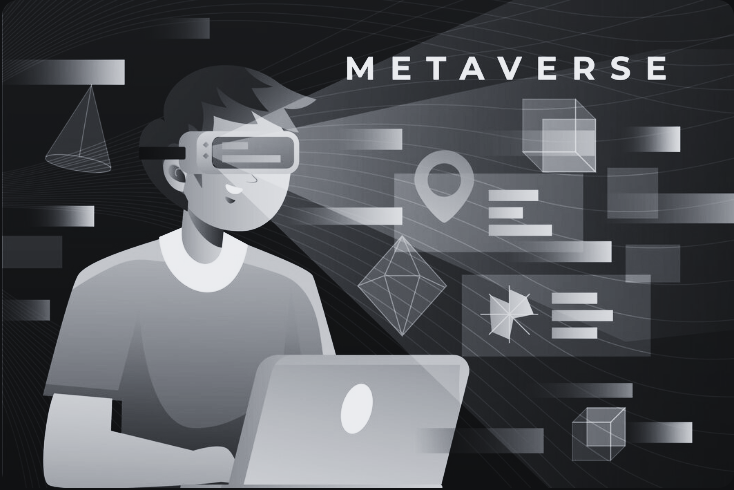
Extended Reality Explained Simply
Extended reality can be understood as a combination of three immersive approaches:
- Virtual reality: complete immersion in a digital space
- Augmented reality: digital layers added to the physical world
- Mixed reality: digital and physical elements interacting in real time
In simple terms, extended reality XR refers to any technology that merges physical environments with digital experiences.
Why Extended Reality Is Gaining Momentum Now
The current focus on XR technology is driven by several converging factors:
- Hardware costs have decreased significantly
- Extended reality software has matured and stabilized
- High-speed internet supports data-heavy immersive applications
- Enterprises demand more effective training, visualization, and collaboration tools
These conditions have positioned XR as a practical business solution rather than an experimental concept.
How Extended Reality Technology Works
Extended reality technology operates by integrating hardware and software systems that synchronize physical and digital inputs.
- Headsets, smart glasses, and mobile devices capture environmental data.
- Sensors and cameras map spatial geometry and movement.
- Extended reality software renders interactive digital content.
- Real-time processing ensures responsive and immersive interaction.
This system allows XR solutions to function on the factory floor, in classrooms, hospitals, retail spaces, and remote locations simultaneously.
Software Foundations Behind XR
XR experiences depend on specialized development tools and platforms:
- Game engines such as Unity and Unreal Engine power most XR environments
- SDKs enable integration across devices and platforms
- 3D modeling tools create detailed virtual objects and environments
Together, these tools enable scalable and high-performance extended reality services.
How Industries Are Using XR Today
The practical impact of XR becomes clear through real-world adoption across industries. Extended reality solutions address safety, efficiency, and learning challenges at scale.
Manufacturers use XR technology for virtual prototyping, equipment visualization, and remote maintenance. Technicians receive step-by-step guidance through augmented overlays, reducing errors and downtime on the factory floor.
Healthcare organizations apply XR for surgical planning, medical education, and patient engagement. Virtual environments allow clinicians to rehearse procedures with precision and zero risk.
XR supports immersive training programs that simulate complex scenarios. Employees develop skills faster through experiential learning rather than traditional instruction methods.
Zero-Risk Training Through Virtual Reality
Traditional training methods often involve operational risk, equipment damage, and slow learning curves. Virtual reality eliminates these challenges by creating realistic simulations in controlled digital environments.
Through VR simulations, trainees interact with digital twins of real systems. Standard procedures, emergency scenarios, and equipment failures are practiced repeatedly without physical consequences.
Key Benefits of VR Training
- Faster skill acquisition through immersive repetition
- Lower error rates before real-world deployment
- Reduced equipment downtime and training costs
This approach strengthens competence, confidence, and safety simultaneously.
Measuring the Success of XR Programs
To validate the business impact of XR initiatives, organizations track performance metrics aligned with operational goals.
Key Metrics for XR Program Evaluation

Operational Efficiency
- Task Completion Time
- First-Time Fix Rate
Cost Savings
- Reduced travel expenditure through remote support
- Lower training material and consumable costs
By monitoring these indicators, extended reality XR programs evolve from innovation experiments into measurable strategic assets.
Final Perspective
Extended reality represents a defining shift in how organizations interact with digital systems, physical environments, and human capabilities. By combining immersive experience, real-time data, and spatial interaction, XR technology reshapes training, operations, and customer engagement across industries.
When implemented with clarity and discipline, extended reality solutions deliver sustained business value and competitive advantage. For enterprises seeking structured guidance and advanced implementation support, organizations such as AtheosTech provide expertise in extended reality services aligned with long-term business strategy.
FAQ's
Extended reality is an umbrella term that combines virtual reality, augmented reality, and mixed reality. It connects physical and digital environments to deliver immersive, real-time experiences for businesses and users.
Virtual reality VR places users inside a fully digital environment. Extended reality includes VR along with augmented reality AR and mixed reality, covering the entire spectrum of technologies that blend digital content with the real world.
Manufacturing, healthcare, retail, education, real estate, and enterprise training benefit significantly from XR technology due to improved visualization, safer operations, and enhanced customer experiences.
Extended reality is rapidly evolving due to advancements in hardware, extended reality software, real-time processing, and deeper integration with digital systems that enhance immersive experience and scalability.
Many organizations rely on experienced solution providers such as AtheosTech to design, implement, and scale extended reality solutions that align with business objectives and measurable performance outcomes.