

- AtheosTech
UI vs UX in Mobile App Design: What’s the Difference?
Discover How Smart UI and UX Design Transform Mobile Apps into Powerful, User-Loved Experiences.
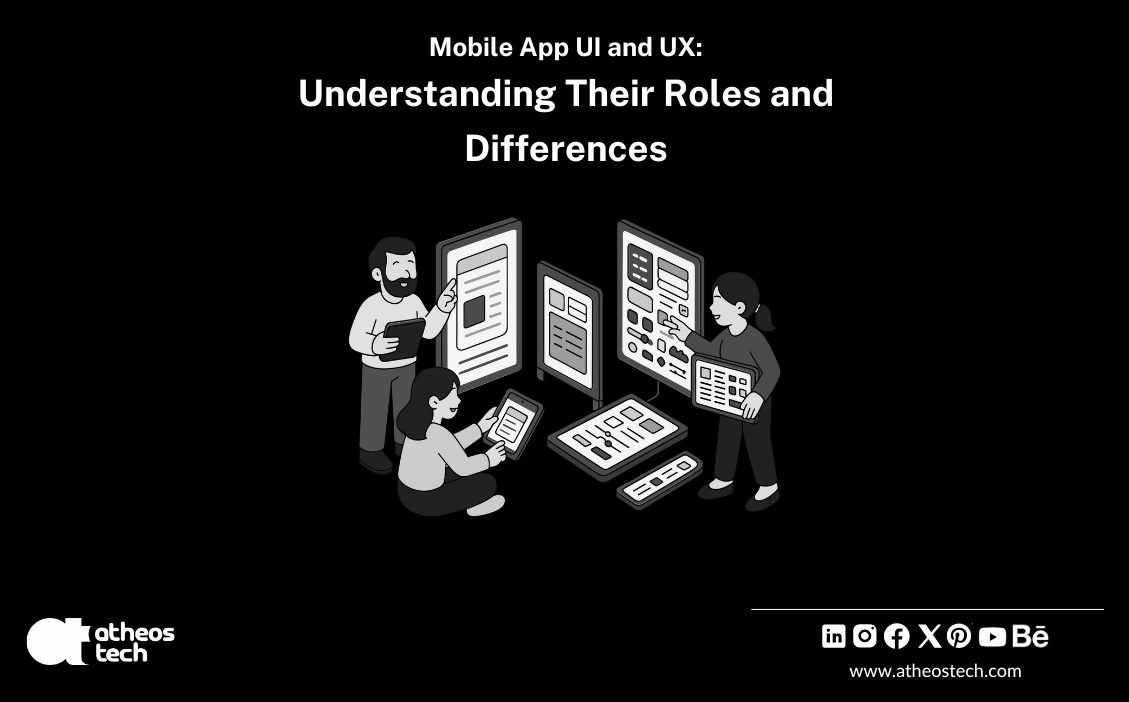
Every time you open your favourite mobile app, whether it’s Instagram, Uber, or Spotify, you’re experiencing the harmony of UI and UX design in motion. It feels natural, fast, and easy. But what makes that experience so effortless?
That’s where the real difference between UI (User Interface) and UX (User Experience) comes into play. These two pillars define how users interact, engage, and connect with your app. While they’re often used interchangeably, each plays a unique role in creating powerful, user-centred designs that shape the success of every digital product.
At AtheosTech, we’ve helped businesses transform ordinary ideas into extraordinary mobile experiences through professional Mobile App Design Services that blend creative visuals with data-driven usability. Let’s break down how UI and UX differ, and why understanding both can take your mobile app from average to exceptional.
UI vs UX in Mobile App Design:
What’s the Difference?

1. The Foundation: What Is Mobile App Design?
Before diving into UI vs UX, it’s important to understand what mobile app design truly means.
Mobile app design isn’t just about creating something that looks attractive; it’s about crafting an experience that makes users feel comfortable, confident, and delighted every time they open your app.
A well-designed app considers everything, from visual appeal and accessibility to navigation, motion, and user psychology. This balance between beauty and usability determines whether users stay or switch to your competitor’s app.
We treat design as a strategic investment, not just decoration. We combine UI and UX principles to ensure every screen communicates clearly, loads fast, and builds trust with every tap.
2. Understanding UX Design: The User’s Journey
UX (User Experience) design focuses on how users feel when they interact with your app.
It’s not just about visuals, it’s about logic, flow, and emotion.
UX designers map out the complete user journey, ensuring that from the first screen to the last, users achieve their goal effortlessly.
Imagine ordering food from an app. UX design decides:
- How easily can you find your favourite dish?
- How quickly can you add it to your cart?
- How smoothly the checkout process feels.
If the process is seamless, that’s great UX design. If it’s confusing or slow, users will abandon the app within seconds.
Our UX Design experts conduct user research, create wireframes, and test prototypes to eliminate friction points. The goal? Deliver experiences that are not just functional but enjoyable.
3. Understanding UI Design: The Visual Experience
UI (User Interface) design is all about what users see: the colors, buttons, icons, typography, and layout. It’s the visual translation of the brand’s identity into an interactive format.
A strong UI builds credibility, emotion, and engagement. When done right, users instantly recognise your brand through design consistency.
Think of UI design as digital fashion; it’s how your app presents itself to the world.
Our UI design team focuses on creating clean, modern, and luxurious visuals that enhance usability and mirror your brand tone.
From minimalist layouts to dynamic animations, we make sure your app doesn’t just look premium, it feels premium.
4. The Key Difference: UX Feels, UI Appeals
Here’s the simplest way to understand the distinction:
- UX design shapes how the app works.
- UI design shapes how the app looks.
Let’s say you’re building a fitness app.
- UX decides how users track their workouts, view progress, and navigate the app.
- UI defines the color palette, button styles, and typography that make the experience visually engaging.
We ensure both UI and UX align perfectly, because one without the other can break the entire experience. A beautiful app that’s hard to use fails. A usable app that looks outdated loses credibility. True success lies in balance.
5. Why Both UI and UX Matter in Mobile App Design
The world’s top-performing apps share one common trait: they prioritise both UI and UX from day one.
Here’s why they’re equally essential:
- UI attracts users with aesthetics and design appeal.
- UX retains users with simplicity and satisfaction.
- Together, they create experiences that drive engagement, trust, and conversions.
We integrate both disciplines through Mobile App Design Services that merge psychology, technology, and artistry. Every pixel, animation, and interaction serves a purpose.
Whether you’re a startup or enterprise, investing in UI/UX design isn’t a luxury; it’s a growth strategy.
6. Common Misconceptions About UI and UX
Many business owners think UI and UX are the same, or that one is more important than the other. That’s a mistake.
Here are some myths we often clarify with clients:
- Myth 1: UX is just wireframing.
Truth: UX covers the entire user journey, from research to testing. - Myth 2: UI is just colors and buttons.
Truth: UI defines the personality and tone of your app; it’s your visual language. - Myth 3: A good-looking app = good design.
Truth: Without intuitive UX, even the most beautiful app will fail to retain users.
When you hire professionals from us, you’re not just getting designers, you’re partnering with strategists who understand how human behaviour drives digital success.
“Transform your Mobile App Design with AtheosTech now”
7. The Role of Research in UI/UX Design
Great design begins with deep understanding.
Our process starts with UX research, user interviews, competitor analysis, and behavioural data. We identify what your audience wants, what frustrates them, and how they navigate digital products.
This research-driven approach helps our team build wireframes, prototypes, and UI systems that solve real problems. Every design decision is backed by insight, not guesswork.
Because when design is data-informed, the experience feels effortless, and users keep coming back.
8. How AtheosTech Crafts Award Winning Mobile Experiences
Our approach to Mobile App Design blends creativity with precision. We don’t just design screens, we design experiences that connect emotionally.
Here’s how we do it:
- Discover: Understanding your business goals and user needs.
- Design: Creating wireframes, prototypes, and style guides.
- Develop: Collaborating with developers for pixel-perfect implementation.
- Deliver: Testing, refining, and optimising for performance.
We believe luxury is in the details, from micro-interactions to typography, from button placement to motion design. Every element must have purpose, rhythm, and elegance.
That’s what separates good apps from unforgettable ones.
9. The Business Impact of Great UI and UX
Strong design directly impacts business growth. Research shows that:
- 88% of users won’t return after a poor experience.
- Thoughtful UX design can increase conversions by 400%.
- Intuitive UI reduces bounce rates and increases engagement time.
So, when you invest in professional Mobile App Design Services from us, you’re not just enhancing aesthetics, you’re improving your bottom line.
Our designs turn clicks into customers and users into loyal brand advocates.
Final Thoughts
In today’s competitive market, your app’s design is your brand’s voice. It tells users who you are, what you value, and how much you care about their experience.
Understanding the difference between UI and UX isn’t just a design lesson; it’s a business strategy. The best apps aren’t just used; they’re loved.
At AtheosTech, we create those loveable experiences through world-class Mobile App Design Services that balance beauty with usability, emotion with logic, and simplicity with innovation.
FAQ's
UI focuses on visual appeal, while UX focuses on usability and satisfaction. Both are crucial for an engaging app
They determine how users interact with your app and whether they’ll stay or leave.
Popular tools include Figma, Adobe XD, Sketch, and InVision for collaboration and prototyping.
Yes. We offer standalone Mobile App Design Services as well as full app design and development solutions.
Typically, it takes 4 - 8 weeks, depending on project scope and complexity.