Prototyping & Wireframing: Reducing Development Risk Before Code
Across global and international retail markets, brands invest heavily in strategy, promotions, and planning. Yet, despite all this effort, execution on the ground often fails. Shelves remain empty, promotions are missed, data arrives too late, and customer experience suffers. This gap between planning and reality is where most retailers lose revenue. At AtheosTech, we’ve seen one truth again and again: retail execution doesn’t fail because teams don’t work hard; it fails because they lack the right AI solutions to act at the right time.
Let’s talk honestly about why retail execution breaks down, and the AI-powered approach that actually works.
Retail execution is the moment where strategy meets the real world. It’s how plans created at headquarters turn into actions across stores, outlets, cafés, supermarkets, and sales floors.
When execution fails, even the best strategies lose their impact.
Retail execution fails not because of poor intent, but because of outdated processes.
In a fast-moving retail environment, this approach simply doesn’t work anymore. By the time data reaches decision-makers, the opportunity is already gone.
Failed execution affects every part of the business.
Without real-time visibility, retailers react late instead of acting early.
One of the biggest reasons AI projects fail in retail is how they begin. Many teams start with vague goals like “we need AI in retail” or “let’s try machine learning.”
This approach leads to disappointment.
Without these answers, even advanced AI models appear to “fail.”
Legacy systems and basic digital tools helped retailers move away from paper, but they stop short of intelligence.
Retail today needs systems that think, learn, and guide action, not just store information.
Retail execution is the moment where strategy meets the real world. It’s how plans created at headquarters turn into actions across stores, outlets, cafés, supermarkets, and sales floors.
When execution fails, even the best strategies lose their impact.
Retail execution fails not because of poor intent, but because of outdated processes.
In a fast-moving retail environment, this approach simply doesn’t work anymore. By the time data reaches decision-makers, the opportunity is already gone.
Failed execution affects every part of the business.
Without real-time visibility, retailers react late instead of acting early.
One of the biggest reasons AI projects fail in retail is how they begin. Many teams start with vague goals like “we need AI in retail” or “let’s try machine learning.”
This approach leads to disappointment.
Without these answers, even advanced AI models appear to “fail.”
Legacy systems and basic digital tools helped retailers move away from paper, but they stop short of intelligence.
Retail today needs systems that think, learn, and guide action, not just store information.
Retail execution is the moment where strategy meets the real world. It’s how plans created at headquarters turn into actions across stores, outlets, cafés, supermarkets, and sales floors.
When execution fails, even the best strategies lose their impact.
Retail execution fails not because of poor intent, but because of outdated processes.
In a fast-moving retail environment, this approach simply doesn’t work anymore. By the time data reaches decision-makers, the opportunity is already gone.
Failed execution affects every part of the business.
Without real-time visibility, retailers react late instead of acting early.
One of the biggest reasons AI projects fail in retail is how they begin. Many teams start with vague goals like “we need AI in retail” or “let’s try machine learning.”
This approach leads to disappointment.
Without these answers, even advanced AI models appear to “fail.”
Legacy systems and basic digital tools helped retailers move away from paper, but they stop short of intelligence.
Retail today needs systems that think, learn, and guide action, not just store information.
“Smarter retail execution starts with the right AI strategy.”
This is where artificial intelligence changes the game.
Modern AI solutions don’t sit on top of retail operations; they become part of them. AI analyzes data continuously, identifies patterns, and recommends actions instantly.
With AI in retail, execution becomes:
AI-driven retail execution focuses on helping field teams and managers make smarter decisions every day.
This transforms retail execution from a reporting task into a competitive advantage.
Machine learning helps retailers plan better by learning from past behavior and current conditions.
Field teams start their day with intelligent plans, not guesswork.
The biggest shift AI brings is real-time insight.
This level of visibility allows teams to act immediately, not weeks later.
Poor inventory management is one of the biggest causes of lost revenue.
A smarter supply chain keeps products available where and when customers need them.
Customers don’t see systems; they see shelves, pricing, and service.
AI improves the customer experience by ensuring:
When execution improves, customers notice, even if they don’t know why.
This is where artificial intelligence changes the game.
Modern AI solutions don’t sit on top of retail operations; they become part of them. AI analyzes data continuously, identifies patterns, and recommends actions instantly.
With AI in retail, execution becomes:
AI-driven retail execution focuses on helping field teams and managers make smarter decisions every day.
This transforms retail execution from a reporting task into a competitive advantage.
Machine learning helps retailers plan better by learning from past behavior and current conditions.
Field teams start their day with intelligent plans, not guesswork.
The biggest shift AI brings is real-time insight.
This level of visibility allows teams to act immediately, not weeks later.
Poor inventory management is one of the biggest causes of lost revenue.
A smarter supply chain keeps products available where and when customers need them.
Customers don’t see systems; they see shelves, pricing, and service.
AI improves the customer experience by ensuring:
When execution improves, customers notice, even if they don’t know why.
This is where artificial intelligence changes the game.
Modern AI solutions don’t sit on top of retail operations; they become part of them. AI analyzes data continuously, identifies patterns, and recommends actions instantly.
With AI in retail, execution becomes:
AI-driven retail execution focuses on helping field teams and managers make smarter decisions every day.
This transforms retail execution from a reporting task into a competitive advantage.
Machine learning helps retailers plan better by learning from past behavior and current conditions.
Field teams start their day with intelligent plans, not guesswork.
The biggest shift AI brings is real-time insight.
This level of visibility allows teams to act immediately, not weeks later.
Poor inventory management is one of the biggest causes of lost revenue.
A smarter supply chain keeps products available where and when customers need them.
Customers don’t see systems; they see shelves, pricing, and service.
AI improves the customer experience by ensuring:
When execution improves, customers notice, even if they don’t know why.
Technology alone doesn’t solve problems. Execution does.
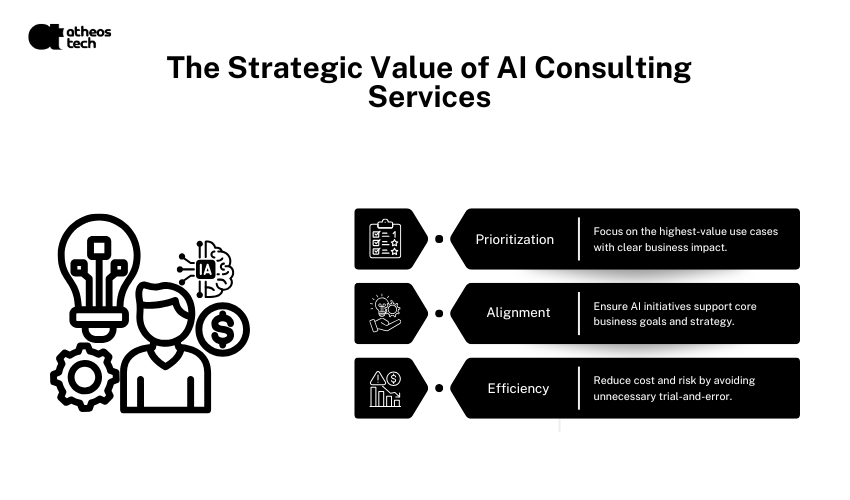
That’s why AI consulting services are essential. They help retailers:
We focus on outcomes first, not technology hype.
Many retailers choose artificial intelligence as a service to avoid heavy upfront investment.
This approach allows:
It’s a practical way to start AI adoption without disruption.
Successful retailers treat AI as a long-term capability, not a one-time project.
Strong AI management includes:
This ensures AI systems stay accurate, relevant, and trusted.
Retailers that succeed with AI rarely build everything alone.
A reliable machine learning development company or AI solutions company brings:
As an experienced AI ML development company, we help retailers move from ideas to impact.
Across the USA, Europe, and international markets, leading retailers are using enterprise AI solutions to strengthen retail execution.
They focus on:
The result is smarter operations and sustainable growth.
The AI solution that works isn’t about doing everything at once. It’s about:
Retail execution improves when AI supports people, not replaces them.
Retailers that succeed with AI rarely build everything alone.
A reliable machine learning development company or AI solutions company brings:
As an experienced AI ML development company, we help retailers move from ideas to impact.
Across the USA, Europe, and international markets, leading retailers are using enterprise AI solutions to strengthen retail execution.
They focus on:
The result is smarter operations and sustainable growth.
The AI solution that works isn’t about doing everything at once. It’s about:
Retail execution improves when AI supports people, not replaces them.
Retail execution fails when teams lack visibility, speed, and intelligence. With the right AI solutions, retailers move from reactive execution to proactive performance.
At AtheosTech, we help retailers globally design, implement, and scale AI-driven retail execution systems that deliver real results, because when execution works, growth follows.
Retail execution often fails because teams lack real-time visibility and rely on manual processes. We see that delays in data and disconnected systems prevent teams from acting when it matters most.
AI solutions analyze data in real time, highlight issues early, and recommend the right actions. AtheosTech uses AI-powered systems to help retailers move from reactive decisions to proactive execution.
No. AI in retail benefits businesses of all sizes. AtheosTech designs scalable AI solutions that work for regional retailers as well as global brands.
Yes. AI improves inventory management by predicting demand, reducing stock-outs, and optimizing the supply chain. AtheosTech builds AI systems that align inventory with actual store-level demand.
AtheosTech provides AI consulting services, implementation, and long-term AI management. We help retailers choose the right use cases, deploy AI smoothly, and scale solutions with confidence.
Retail execution often fails because teams lack real-time visibility and rely on manual processes. We see that delays in data and disconnected systems prevent teams from acting when it matters most.
AI solutions analyze data in real time, highlight issues early, and recommend the right actions. AtheosTech uses AI-powered systems to help retailers move from reactive decisions to proactive execution.
No. AI in retail benefits businesses of all sizes. AtheosTech designs scalable AI solutions that work for regional retailers as well as global brands.
Yes. AI improves inventory management by predicting demand, reducing stock-outs, and optimizing the supply chain. AtheosTech builds AI systems that align inventory with actual store-level demand.
AtheosTech provides AI consulting services, implementation, and long-term AI management. We help retailers choose the right use cases, deploy AI smoothly, and scale solutions with confidence.
Adding {{itemName}} to cart
Added {{itemName}} to cart